
Radiation and Nuclear Safety Authority measures human radioactivity in Rovaniemi
4.4.2024 08:00:00 EEST | Säteilyturvakeskus (STUK) | Press release
Human radioactivity measurements to be carried out by the Radiation and Nuclear Safety Authority in Rovaniemi are part of the programme to measure the radioactivity of the population, which began in the 1960s.
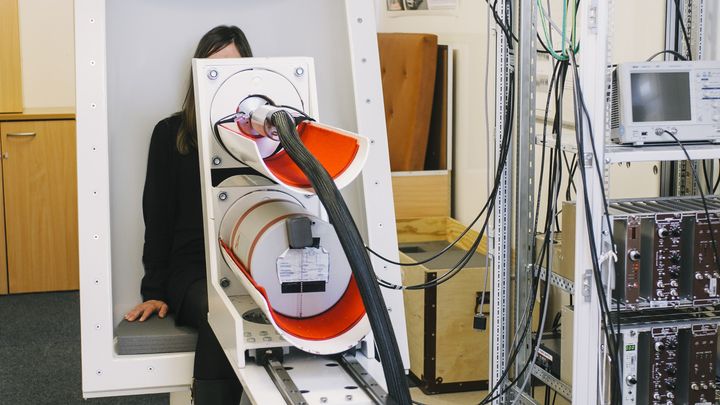
The box truck parked in front of the main door of the Rovaniemi campus of the University of Lapland from Monday, 8 April to Thursday, 11 April, will reveal what radioactive substances are in the human body and how much radiation the human body emits.
Volunteer students and staff from the University of Lapland and the Lapland University of Applied Sciences have been invited to participate in the measurements that will take fifteen minutes.
STUK also carries out similar measurements in Helsinki and Tampere. On the basis of the measurements, STUK calculates the radiation doses that Finns receive from radioactive substances in themselves and how much of the substances and doses comes from man-made substances.
Reindeer breeders were measured first
The first group called to population measurements in Finland were reindeer breeders in Northern Lapland, and the first measurements were carried out in 1962. At that time, radioactive materials from nuclear weapons detonated in the atmosphere landed along with the rains, especially in the north. Lichens effectively collected radioactivity and, through reindeer, it accumulated especially in reindeer breeders who ate a lot of reindeer meat.
Nuclear weapons tests have not been carried out in the atmosphere in the north since 1963, and the last nuclear weapon explosion in the atmosphere in general dates back to 1980. Today, the radioactivity of reindeer breeders is no different from that of the rest of the population. This is also influenced by the diversification of reindeer breeders’ diets.
However, there are still very small but measurable amounts of radioactive substances in Finnish nature, both from nuclear weapons tests and from the Chernobyl accident of 1986. Of these, the most significant is the caesium isotope 137.
There is no need to worry about the radiation dose caused by caesium-137. It is less than one-thousandth of the total annual average dose received by Finns from various sources and has no impact on human health.
Most of the radiation dose received by Finns is due to various external sources, and not the radioactivity inside the body. Indoor radon gas in homes and workplaces causes most of the radiation received by Finns.
Keywords
Contacts
Media contacts
Tel:+358(10)8504761Subscribe to releases from Säteilyturvakeskus (STUK)
Subscribe to all the latest releases from Säteilyturvakeskus (STUK) by registering your e-mail address below. You can unsubscribe at any time.
Latest releases from Säteilyturvakeskus (STUK)
Geografisk information stöder beslutsfattandet i en nödsituation med strålrisk16.9.2026 14:29:15 EEST | Pressmeddelande
Strålsäkerhetscentralen (STUK) har i det EU-finansierade IDEAMETA-projektet utvecklat nya digitala lösningar för att skapa en lägesbild av nödsituationer med strålrisk samt för att sammanställa och dela lägesinformation. Utvecklingsarbetet gör bedömningen av strålningssituationen snabbare och förbättrar Finlands förmåga att svara på kärn- och strålningsolyckor.
Paikkatieto tukee päätöksentekoa säteilyvaaratilanteessa16.9.2026 14:29:15 EEST | Tiedote
Säteilyturvakeskus (STUK) on kehittänyt EU-rahoitteisessa IDEAMETA-hankkeessa uusia digitaalisia ratkaisuja säteilyvaaratilanteiden tilannekuvan muodostamiseen ja tilannetiedon kokoamiseen ja jakamiseen. Kehitystyö nopeuttaa säteilytilanteen arviointia ja parantaa Suomen kykyä vastata ydin- ja säteilyonnettomuuksiin.
Mycket små mängder radioaktivt kobolt i luften i Imatra i augusti10.9.2026 13:32:57 EEST | Pressmeddelande
Strålsäkerhetscentralen (STUK) upptäckte radioaktivt kobolt i ett luftpartikelprov som samlades in i Imatra i augusti.
Imatran ilmassa oli elokuussa hyvin vähän radioaktiivista kobolttia10.9.2026 13:32:57 EEST | Tiedote
Säteilyturvakeskus havaitsi Imatralla elokuussa kerätyissä ilman hiukkasnäytteessä radioaktiivista kobolttia.
IAEA:n tiedote: Kansainvälinen atomienergiajärjestö IAEA arvioi Suomen ydin- ja säteilyturvallisuusvalmiutta3.9.2026 12:01:51 EEST | Tiedote
Kansainvälisen atomienergiajärjestön (IAEA) asiantuntijaryhmä on päättänyt kymmenen päivää kestäneen arviointitehtävänsä, jonka aikana se arvioi Suomen ydin- ja säteilyvaaratilanteisiin varautumista ja valmiusjärjestelyjä. Emergency Preparedness Review (EPREV) -arviointi tehtiin Suomen hallituksen pyynnöstä, ja sen käytännön järjestelyistä Suomessa vastasi Säteilyturvakeskus (STUK).
In our pressroom you can read all our latest releases, find our press contacts, images, documents and other relevant information about us.
Visit our pressroom