
The lifespan of a modern fiberglass boat can exceed one hundred years
17.5.2024 06:00:00 EEST | Finnboat | Press release
When new building materials for boats replaced wood during the 1960s and 1970s, the lifespan of boats increased from a few decades to over a hundred years. According to Finnboats' estimation, only slightly over a thousand boats are taken out of service annually in Finland.
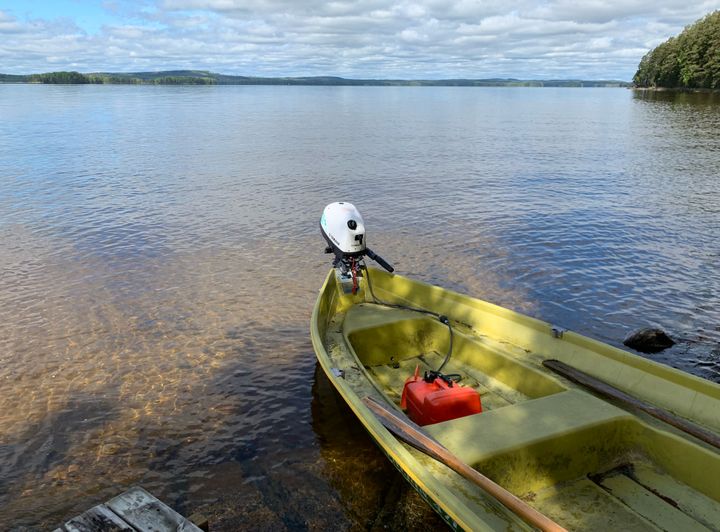
"The long lifespan of boats is positive for the environment because it saves both raw materials and energy. We have not yet seen a limit for the lifespan of fiberglass boats, as the material only became common about fifty years ago", says Jarkko Pajusalo, CEO of the Finnish Marine Industries Federation Finnboat.
A new report from the Ministry of the Environment, based on a life cycle analysis, estimates that with an assumed service life of 40 years, up to 18,000 boats would be taken out of use annually.
"If over 10,000 boats were taken out of use annually in Finland, we would have a huge amount of waste somewhere. But there are no signs of that. Instead, boats that are 40 years old usually just need an engine replacement", says Pajusalo.
Rowboats are seldom recycled, whereas only a limited quantity of large fiberglass boats have been decommissioned
In 2006, about 400 boats were gathered through a collaborative effort involving Finnboat and the environmental association Keep the Archipelago Tidy. These boats had been left unused in the archipelago for decades. In recent years, Keep the Archipelago Tidy Association, and waste management company Lounais-Suomen Jätehuolto Oy (LSJH) have on average recycled about a hundred boats annually.
In Finland, there are approximately 300,000 fiberglass rowboats in use. Each year, around 1,500 new rowboats are sold, suggesting that the renewal rate for small boats may be between 0.2 and 0.5 percent.
"In the early 1970s, there was a huge surge in fiberglass boats as small wooden boats were replaced by modern fiberglass boats. Now, these older boats are being replaced with new ones. However, most of the fiberglass boats manufactured in recent decades are still usable and are used at summer cottages", continues Pajusalo.
Only a small number of large fiberglass boats have been decommissioned. Yamarin, one of Finland's most popular motorboat brands, has been in production with various models since 1972 with a total of over 100,000 units, and almost all of them are still in use.
"Individual units have been taken out of use, mainly boats that have been damaged in accidents or fires and where it was no longer profitable to repair them", confirms Christopher Sjöblom, CEO of the manufacturer of Yamarin boats, Inha Works Ltd.
Fiberglass is recycled in the manufacturing of cement
Fiberglass, also known as glass fiber reinforced plastic, can be recycled in the manufacturing of cement once the boat's lifespan has ended. In this process, the fiberglass used as reinforcement in the composite structure is mineralized into raw material for cement, replacing materials such as limestone. The plastic material, typically polyester resin, is burned, producing energy required for cement manufacturing, thus reducing the need for fossil fuels.
In Finland, the recycling of plastic composites is facilitated through a collaboration between Kuusakoski Recycling and Finncement. Kuusakoski Ltd receives the material, crushes it to the size required by the cement factory, and then delivers it for recycling at Finncement's factory in Lappeenranta, Finland.
"However, only a small fraction of the plastic composites manufactured in Europe are allocated to boat production, comprising merely 2–3 percent, so it is important to consider recycling as a whole and ensure that all plastic composites are recycled", concludes Pajusalo.
Small boats are also built in ABS plastic, which is incinerated at the end of the boat's lifespan. The energy content of ABS plastic is equivalent to fuel oil. On the other hand, aluminum boats are practically fully recyclable, and the use of recycled aluminum saves significant amounts of energy compared to the production of virgin aluminum.
Do we need to accelerate recycling?
The boat industry's view on the matter is that old and affordable boats are advantageous for boating as a hobby – they offer a very cost-effective way to get out on the water. But do old boats pose environmental or safety risks that would justify them being taken out of use more quickly?
According to Jarkko Pajusalo, it is justified from a safety standpoint to replace some of the oldest rowboats with newer models. The safety requirements, especially regarding buoyancy, have become stricter since the Recreational Craft Directive came into force in 1998. Prior to that, there was a voluntary type approval process developed by Finnboat in the early 1960s. Since type approval was voluntary, not all small boat manufacturers followed it.
"Especially rowboats, whose buoyancy does not meet today's requirements, should be replaced with new and safer models", says Pajusalo.
When it comes to the lifespan of larger boats, Pajusalo encourages considering the total costs. For example, updating the interior, sails, engine, and other technology in a recreational boat can become quite expensive in relation to the boat's total value.
"The boat is primarily a recreational interest, so its utility value is most important for the owner. A boat in good condition can be renovated and modernized several times to extend its lifespan. A well-maintained fiberglass boat is almost immortal, and renovating older boats is an important part of the hobby for many", assesses Pajusalo.
As a source of microplastics in oceans or lakes, old boats are not particularly significant because the material does not degrade significantly in waterways. However, it is important to ensure that boats taken out of use are recycled properly.
"A small portion of boats, however, for various reasons, reach the end of their lifespan earlier than usual. To accelerate recycling, one should consider a scrappage bonus for boats and an obligation for municipalities to deliver all composite waste for recycling instead of incineration", says Pajusalo.
Finnboat does not consider it justified to extend producer responsibility to include boats.
"Extended Producer Responsibility (EPR) is a significant issue for rapidly turning over electronics, as well as for automobiles. However, the system is not suitable for products like boats, whose recycling volume is low and whose lifespan spans over several generations. Additionally, the administrative costs would be too high in relation to the benefits," concludes Pajusalo.
Keywords
Contacts
Jarkko PajusaloManaging Director, Finnish Marine Industries Federation Finnboat
Tel:+358 40 673 4032jarkko@finnboat.fiImages

Links
Alternative languages
Subscribe to releases from Finnboat
Subscribe to all the latest releases from Finnboat by registering your e-mail address below. You can unsubscribe at any time.
Latest releases from Finnboat
Flytande väckte köplust bland båtintresserade20.8.2026 12:51:51 EEST | Pressmeddelande
Handeln med båtar och båttillbehör var livlig på den flytande båtutställningen i Helsingfors. Båtsäsongens stora final lockade drygt 10 000 besökare till Drumsö under de fyra mässdagarna.
Vene- ja tarvikekauppa kävi vilkkaasti Helsingin Uivassa venenäyttelyssä20.8.2026 12:51:51 EEST | Tiedote
Veneiden ja veneilytarvikkeiden kauppa kävi vilkkaasti Helsingin Uivassa venenäyttelyssä. Veneilykauden huipentuma houkutteli Lauttasaareen neljän päivän aikana reilusti yli 10 000 vierasta.
Boat and equipment sales pick up at Uiva Flytande, Finland’s in-water boat show20.8.2026 12:51:51 EEST | Press release
Sales of boats and boating equipment were brisk at the Uiva Flytande in-water boat show in Helsinki. The traditional highlight of the Finnish boating season, held in mid-August at the marina of Helsingfors Segelklubb (Sailing club HSK) in Lauttasaari, an island district in western Helsinki, attracted well over 10,000 visitors over four days.
Båtsäkerhet: roddbåtar bör omfattas av lagstiftningen för sjötrafiken13.8.2026 10:00:00 EEST | Pressmeddelande
För att förbättra säkerheten på sjön måste man fokusera på mänskliga faktorer, eftersom de flesta drunkningsolyckorna beror på att båtförarens funktionsförmåga är nedsatt. Det behövs förändringar både i kulturen och lagstiftningen, särskilt när det gäller användningen av roddbåtar vid sommarstugor, säger Jarkko Pajusalo, vd för Båtbranschens Centralförbund Finnboat.
Veneilyn turvallisuus: soutuveneet saatava vesiliikenteen lainsäädännön piiriin13.8.2026 10:00:00 EEST | Tiedote
Veneilyn turvallisuuden parantamiseksi on pureuduttava inhimillisiin tekijöihin, sillä suurin osa hukkumiskuolemista johtuu veneen käyttäjän toimintakyvyn heikkenemisestä. Kulttuurin ja myös lainsäädännön muutosta tarvitaan erityisesti kesämökkien soutuveneiden käyttöön, sanoo Venealan Keskusliitto Finnboatin toimitusjohtaja Jarkko Pajusalo.
In our pressroom you can read all our latest releases, find our press contacts, images, documents and other relevant information about us.
Visit our pressroom