
Tick-borne encephalitis more common: number of hospitalized patients increased
3.12.2025 10:03:20 EET | HUS | Press release
The number of tick-borne encephalitis cases (TBE) has clearly increased from last year. The increase has been evident at HUS emergency departments, on neurology wards, as well as on intensive and intermediate care units. TBE has surpassed herpesvirus as a leading cause of severe encephalitis.
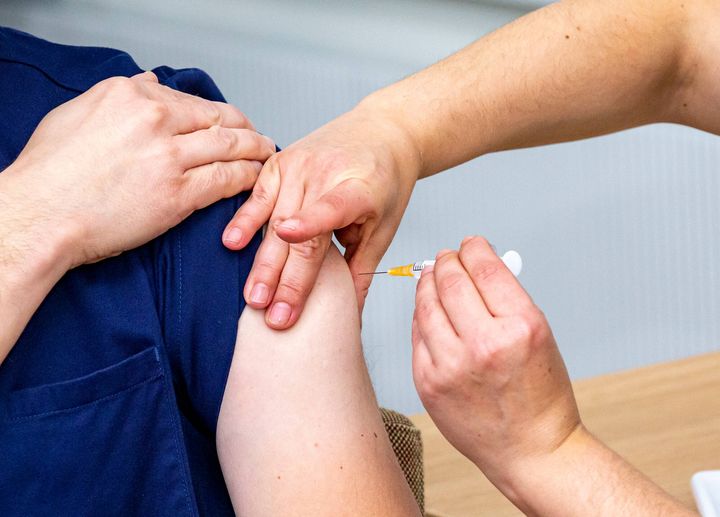
Last year, the total number of TBE cases diagnosed in Finland was 195, but by the end of November 2025, 227 cases have already been entered in the Finnish National Infectious Diseases Register.
In the HUS region, the number of TBE cases has increased from 91 in 2024 to 120 at the end of November 2025. TBE has been common in Western Uusimaa previously as well, but now the number of cases has increased in Helsinki especially. Some of the affected Helsinki residents may have contracted the infection elsewhere. All cases of TBE are annually reported to the National Infectious Diseases Register maintained by the Finnish Institute for Health and Welfare (THL).
Three out of four patients have incomplete vaccinations
The increase in the number of cases has been evident in the West Uusimaa wellbeing services county, and at HUS emergency departments in Lohja, Jorvi, and Meilahti hospitals. At worst, during the summer, a third of the patients admitted to Jorvi Hospital Neurology Ward had TBE. In the HUS region, 14% of TBE patients needed intensive or intermediate care. Some of the patients who received intensive care require long rehabilitation before they can be discharged.
Two percent of patients diagnosed with TBE died. The actual mortality is lower than this, as a significant number of minor TBE cases are never diagnosed. Of all patients with TBE, 69% had no vaccination, and 13% had received incomplete immunization or the immunization was no longer effective.
TBE more common than herpes
TBE has surpassed herpesvirus as a leading cause of severe encephalitis, at least during the summer. Herpesviruses remain a significant cause of encephalitis and are treated with antiviral medication. The occurrence of herpesviruses does not change with the seasons, whereas TBE occurs mainly in the summer and early fall.
The TBE virus is transmitted through tick bites already at an early stage of the bite. Only some of the infected have symptoms, and about 20–30% of those with symptoms develop actual encephalitis.
Get TBE vaccine now
There is a vaccination against TBE, and it prevents infections in about 90% of vaccinated people. The vaccine is free for people who live in certain risk areas.
“People who spend time in nature in the risk areas should now get the TBE vaccine for next summer. This could decrease the amount of TBE cases,” says Infectious Diseases Specialist Elisa Kortela from HUS Inflammation Center.
The immunization is complete after a series of three doses. Everyone will also need a booster three years later, after which the interval of boosters depends on the person's age.
The majority of tick bites remain unnoticed. When roaming in nature, check if the region is one of the tick-bite risk regions defined by THL, where the vaccines are especially recommended. These include Lohja, Kirkkonummi, Espoo, Sipoo, and parts of Helsinki. Ticks may also end up indoors in pets’ fur.
Keywords
Contacts
Elisa KortelaSpecialist, HUS Inflammation Center
Tel:050 427 1507elisa.kortela@hus.fiAuli Verkkoniemi-AholaChief Physician, HUS Neurocenter
Tel:050 427 0312auli.verkkoniemi-ahola@hus.fiAbout HUS
HUS Helsinki University Hospital is the biggest provider of specialized healthcare in Finland. Our high expertise is internationally recognized and accredited. As a university hospital, we are on the cutting edge of developing and evaluating our treatment methods and activities.
HUS treats almost 700,000 patients every year. Our more than 27,000 professionals work to provide the best possible care for our patients. We are responsible for organizing specialized health care in the Uusimaa region. The treatment of many rare and difficult diseases in Finland has been centralized to HUS as well.
HUS – Leading healthcare
The HUS media service is available for the media Mon–Thu 10:00 a.m.–4:00 p.m. and Fri 10:00 a.m.–3:00 p.m., tel. 050 427 2875, or via e-mail: viestinta@hus.fi.
hus.fi/en
Alternative languages
Subscribe to releases from HUS
Subscribe to all the latest releases from HUS by registering your e-mail address below. You can unsubscribe at any time.
Latest releases from HUS
Sammanslutningens styrelse valde HUS nya leverantör av bilddiagnostisk lösning5.10.2026 13:16:05 EEST | Pressmeddelande
På sitt möte valde sammanslutningens styrelse HUS nya leverantör av bilddiagnostisk lösning och behandlade verksamheten och ekonomin för januari–augusti 2026.
Yhtymähallitus valitsi HUSin kuvantamisratkaisun toimittajan5.10.2026 13:16:05 EEST | Tiedote
Yhtymähallitus valitsi kokouksessaan HUSin kuvantamisratkaisun toimittajan sekä käsitteli tammi−elokuun 2026 toimintaa ja taloutta.
Studie gav ny kunskap om immunförsvaret vid leukemi29.9.2026 08:26:54 EEST | Pressmeddelande
Forskare vid HUS Cancercentrum och Helsingfors universitet utredde hur immunsystemet hos patienter med akut myeloisk leukemi reagerade på experimentell immunterapi. Förändringar som hänför sig till terapiresponsen visade sig i andra immunceller än förväntat baserat på tidigare studier.
Tutkimus toi uutta tietoa leukemian immuunipuolustuksesta29.9.2026 08:26:54 EEST | Tiedote
HUSin Syöpäkeskuksen ja Helsingin yliopiston tutkijat selvittivät, miten akuuttia myelooista leukemiaa sairastavien potilaiden immuunijärjestelmä reagoi kokeelliseen immunoterapiaan. Hoitovasteeseen liittyvät muutokset näkyivät eri immuunisoluissa kuin aiempien tutkimusten perusteella olisi voitu odottaa.
Study provides new insights into the immune response in leukemia29.9.2026 08:26:54 EEST | Press release
Researchers at HUS Comprehensive Cancer Center and the University of Helsinki investigated how the immune systems of patients with acute myeloid leukemia (AML) respond to experimental immunotherapy. The study found that changes associated with treatment response were observed in different immune cell types than would have been expected based on previous research.
In our pressroom you can read all our latest releases, find our press contacts, images, documents and other relevant information about us.
Visit our pressroom