
You cannot conclude your home’s radon concentration from the results measured in the neighbouring dwelling
15.12.2025 11:32:26 EET | Säteilyturvakeskus (STUK) | Press release
According to a report by the Radiation and Nuclear Safety Authority, radon concentrations may vary significantly between the dwellings within the same housing company. Radon concentration does not remain constant even in an individual dwelling. Radon prevention in the construction phase of new houses and radon mitigation measures in later stages work for a long time, but monitoring is important.
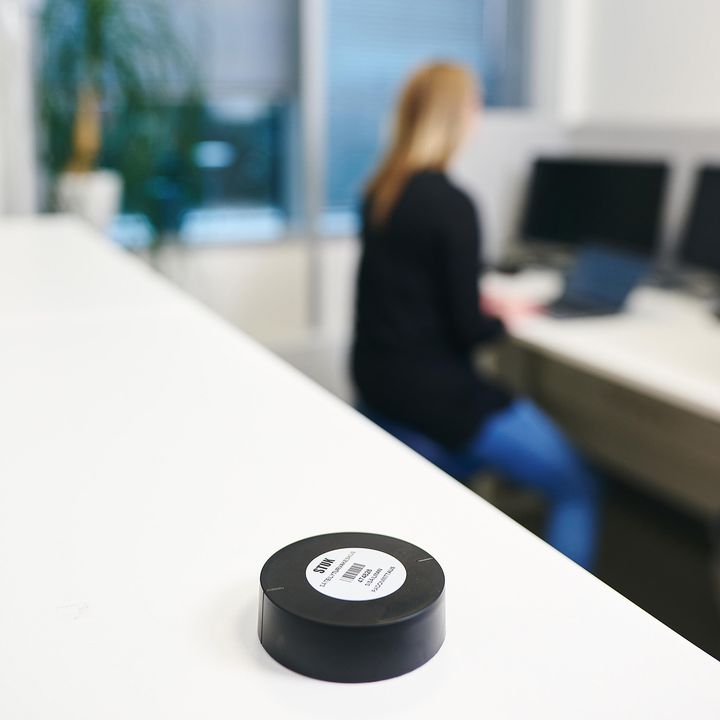
Radon is an invisible and odourless radioactive gas that is carried into the indoor air of buildings, mainly from the soil, through gaps in the base of the building. Since radon cannot be sensed in any way, measuring is the only way to find out the radon concentration.
A housing company should measure all its dwellings in contact with soil at the same time, as radon concentrations may vary significantly between different dwellings. The variation may be caused by reasons such as the tightness of the base floor and the way ventilation works.
“In housing companies, it often happens that an individual resident has their dwelling measured independently. This provides information on the radon situation of one dwelling only. Or, to save money, a housing company with terraced housing, for example, only carries out measurements in some of the dwellings,” says Tuukka Turtiainen, Senior Inspector at the Radiation and Nuclear Safety Authority (STUK).
Therefore, many residents seem to conclude their own home’s radon concentration based on the results of the neighbouring dwelling. According to Tuukka Turtiainen, it is not a good idea to leave some dwellings unmeasured in a housing company with single-family houses.
“STUK analysed more than 15,000 dwellings searched from the national radon register. The analysis shows that the differences in radon concentrations between dwellings in the same housing company may be multifold. There have been cases where the radon concentration in one dwelling has been eightfold compared to the adjacent dwelling.”
Radon concentration does not remain constant even in an individual dwelling. For this reason, radon concentration of a dwelling should be measured at two different measuring points.
Radon mitigation and prevention work for a long time
Sometimes the measurement results give rise to actions aimed at reducing the high radon concentration. The easiest way to prevent radon is to address the issue at the construction stage of the building. Radon concentration can also be reduced by mitigation methods, such as sub-slab suction.
In 2021–2022, STUK conducted a study where it measured the radon concentrations of two types of dwellings for six months: dwellings that have previously taken radon mitigation measures and dwellings where radon prevention had been carried out during the construction phase. The radon measures of the dwellings included in the study had been carried out between 2000 and 2016. The data included a total of 348 dwellings.
According to the research results, radon mitigation and prevention worked well even years after construction or start of radon mitigation. Radon prevention in new houses (radon piping, sealing) still works well after 6 to 16 years. For the main part, radon mitigation methods (sub-slab suction, radon well) work well 10 to 20 years after the repairs.
“However, it is important to monitor the radon concentration regularly so that any defects are detected in good time. In addition, it is essential to maintain and clean the ventilation system in accordance with the manufacturer’s instructions and to renew radon mitigation systems as they reach the end of their life cycle,” says Senior Inspector Olli Holmgren from STUK.
Reliable radon measurement requires time
Inexpensive electronic radon meters and short-term radon measurements lasting a few days have become more common on the market. They are even offered free of charge. Based on short-term measurement results, the company that performed the measurement may have tried to sell radon mitigation systems to the resident.
Reliable radon measurement lasts at least two months between September and May to ensure that the average radon concentration for the whole year can be reliably estimated. Short-term measurements may give misleading results, as they may take place at the time of exceptionally high or low concentration. For this reason, STUK always recommends long-term radon measurement before making decisions on any mitigation methods.
Radon measurement is primarily carried out using an alpha track detector, which are sold in Finland by five laboratories. The results reported by them are accurate, and the measurement period is long enough. The cheap electric meters have not been individually calibrated, so the result they report is not necessarily accurate. Too short measurement time often increases the error.
Keywords
Contacts
Media contacts
Tel:+358(10)8504761Links
About STUK
Radiation and Nuclear Safety Authority (STUK) supervises radiation and nuclear safety in Finland. Our mission is to protect people, society, the environment and future generations from the detrimental effects of radiation.
Alternative languages
Subscribe to releases from Säteilyturvakeskus (STUK)
Subscribe to all the latest releases from Säteilyturvakeskus (STUK) by registering your e-mail address below. You can unsubscribe at any time.
Latest releases from Säteilyturvakeskus (STUK)
Geografisk information stöder beslutsfattandet i en nödsituation med strålrisk16.9.2026 14:29:15 EEST | Pressmeddelande
Strålsäkerhetscentralen (STUK) har i det EU-finansierade IDEAMETA-projektet utvecklat nya digitala lösningar för att skapa en lägesbild av nödsituationer med strålrisk samt för att sammanställa och dela lägesinformation. Utvecklingsarbetet gör bedömningen av strålningssituationen snabbare och förbättrar Finlands förmåga att svara på kärn- och strålningsolyckor.
Paikkatieto tukee päätöksentekoa säteilyvaaratilanteessa16.9.2026 14:29:15 EEST | Tiedote
Säteilyturvakeskus (STUK) on kehittänyt EU-rahoitteisessa IDEAMETA-hankkeessa uusia digitaalisia ratkaisuja säteilyvaaratilanteiden tilannekuvan muodostamiseen ja tilannetiedon kokoamiseen ja jakamiseen. Kehitystyö nopeuttaa säteilytilanteen arviointia ja parantaa Suomen kykyä vastata ydin- ja säteilyonnettomuuksiin.
Mycket små mängder radioaktivt kobolt i luften i Imatra i augusti10.9.2026 13:32:57 EEST | Pressmeddelande
Strålsäkerhetscentralen (STUK) upptäckte radioaktivt kobolt i ett luftpartikelprov som samlades in i Imatra i augusti.
Imatran ilmassa oli elokuussa hyvin vähän radioaktiivista kobolttia10.9.2026 13:32:57 EEST | Tiedote
Säteilyturvakeskus havaitsi Imatralla elokuussa kerätyissä ilman hiukkasnäytteessä radioaktiivista kobolttia.
IAEA:n tiedote: Kansainvälinen atomienergiajärjestö IAEA arvioi Suomen ydin- ja säteilyturvallisuusvalmiutta3.9.2026 12:01:51 EEST | Tiedote
Kansainvälisen atomienergiajärjestön (IAEA) asiantuntijaryhmä on päättänyt kymmenen päivää kestäneen arviointitehtävänsä, jonka aikana se arvioi Suomen ydin- ja säteilyvaaratilanteisiin varautumista ja valmiusjärjestelyjä. Emergency Preparedness Review (EPREV) -arviointi tehtiin Suomen hallituksen pyynnöstä, ja sen käytännön järjestelyistä Suomessa vastasi Säteilyturvakeskus (STUK).
In our pressroom you can read all our latest releases, find our press contacts, images, documents and other relevant information about us.
Visit our pressroom