
Proposal: Fragmented health data and expertise must be unified – new national model would make Finland a leader in AI
10.2.2026 01:00:00 EET | Sitra | Press release
Artificial intelligence is rapidly transforming healthcare, but reaping the benefits requires reform in Finland. A report produced by Sitra in collaboration with the Ministry of Social Affairs and Health and other key health sector stakeholders proposes the establishment of a national health data space as a solution. It would consolidate fragmented data reserves and expertise into a single entity, enabling more personalised care, helping to curb social and health care costs, and accelerating growth in health sector research and business.
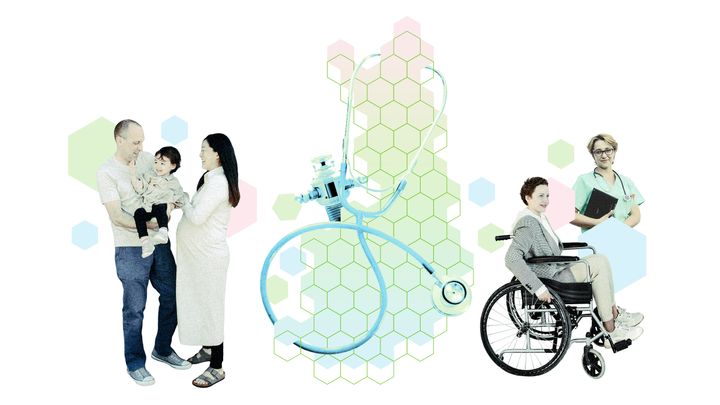
Finland should establish a national health data space (Finnish Health Data Space, FHDS) to address the funding crisis in social and health care and resolve fragmented data management. This is the proposal of the new report The Future of Health Data in the Age of AI (summary in English), published by the Finnish Innovation Fund Sitra on Tuesday, 10 February 2026.
The health data space refers to a national operating model that brings together health data infrastructure, permitting, and research, development and innovation (RDI) activities into a unified whole.
The need for reform is acute, as an ageing population and rising multi-morbidity increase the demand for services, whilst resources remain tight. Rapid advances in AI could help wellbeing services counties, for example, to develop their services, improve the effectiveness of care and curb costs.
Finland possesses the world's best health data resources, but current data silos and rigid permitting processes prevent the efficient utilisation of the data required for AI.
Change is inevitable in any case, as the European Health Data Space (EHDS) regulation will oblige member states to open up health data for secondary use in the coming years. According to the report, Finland should build a solution now from its own starting points and turn the obligation into a competitive advantage.
"A national health data space is a critical investment that enables the utilisation of AI and, through it, the reform of social and health services and growth in the health sector. Without change, Finland will not realise the benefits that AI could deliver," emphasises Petri Lehto, Senior Lead at Sitra, who led the report work.
The report was prepared by experienced health sector experts: Olli Kallioniemi, Research Director at the University of Helsinki, and Kimmo Porkka, Professor at the University of Helsinki. Sitra launched the report work at the request of the Ministry of Social Affairs and Health (STM). The work has been carried out in collaboration with the Ministry and dozens of health sector stakeholders.
New model combines data, permits and research
According to the report, the key challenges of Finnish healthcare cannot be solved without a common, up-to-date and unified knowledge base. The authors of the report propose a model with three key roles as a solution:
- National Health Data Infrastructure (FHDS Data): Collects and harmonises data, ensures its quality, and simultaneously offers a secure route to high-performance computing.
- National Permit Authority (FHDS Permit): Ensures that health data is used legally, ethically and uniformly – and that citizens' rights, data protection and trust are upheld. The FHDS Permit consolidates fragmented permit procedures into a single national model.
- National RDI Operator (FHDS RDI): Brings together researchers, growth companies and administration to utilise health data safely in value creation, innovation and steering.
"The model offers a structural solution: it enables research, innovation, individual rights and the steering of healthcare to be taken into account within a single national model. Data is harmonised once and utilised for multiple purposes," says Olli Kallioniemi.
National health data space would benefit society as a whole
The change would enable a transition towards preventive healthcare, allowing latent risks threatening people's health and wellbeing to be identified and addressed before symptoms appear. This would enable higher quality care and help curb costs.
For citizens, the change would be visible, for example, in more personalised care and more efficient use of tax revenue. Furthermore, it would also enable individuals to see where their own data is used and make it easier to give consent for data use in research.
For the Finnish economy, a clear operating model and high-quality data are competitive advantages that can attract investments and boost exports. Science, in turn, would benefit from a direct and secure connection between health data and LUMI, the most powerful supercomputer in Europe, located in Kajaani.
"The new model cuts red tape, freeing up time for research itself. By combining high-quality health data and high-performance computing, we can enable medical breakthroughs and better care for patients," states Kimmo Porkka.
Pilots should be launched as early as 2026
The rapporteurs propose that the Government appoint a cross-administrative steering group and adopt a resolution on implementing the model. Practical implementation could be launched agilely through pilots in 2026–2027.
The report was handed over to the Ministry of Social Affairs and Health for further preparation on Tuesday, 10 February 2026. According to the Ministry, the social and health sector is undergoing a historically significant technological transformation globally. In Finland, the health sector has been identified as one of the most promising sectors in strategies dealing with research, product development and accelerating growth.
"Global markets for drug development and health technology are predicted to multiply in the coming years. Finland has all the prerequisites to be a leading country in developing new solutions. The proposal now published on the smooth and safe use of data is a prerequisite for this," emphasises Päivi Sillanaukee, Programme Director at the Ministry of Social Affairs and Health.
Based on the report, the Ministry will begin preparing a proposal for the Government on how to proceed.
Background
|
Keywords
Contacts
Olli Kallioniemi, Research Director, University of Helsinki
olli.kallioniemi@helsinki.fi, tel. +358 50 415 0363
Kimmo Porkka, Professor, University of Helsinki
kimmo.porkka@helsinki.fi, tel. +358 50 427 0192
Petri Lehto, Senior Lead, Sitra
petri.lehto@sitra.fi, tel. +358 50 3878 068
Interview requests:
Antti Koistinen, Communications Partner, Sitra Programmes
antti.koistinen@sitra.fi, tel. +358 29 461 8384
Links
About the publisher
Sitra is a Future Fund that helps Finland to reform. We anticipate the future. We develop solutions to tomorrow’s challenges in collaboration with our partners. We promote Finland's well-being and accelerate sustainable economic growth. A better future demands action today.
Alternative languages
Subscribe to releases from Sitra
Subscribe to all the latest releases from Sitra by registering your e-mail address below. You can unsubscribe at any time.
Latest releases from Sitra
Enkät: Finländarna ser en tillväxtmöjlighet i den gröna omställningen – Finland behöver en tydligare riktning20.10.2026 07:00:00 EEST | Pressmeddelande
Finländare stöder EU:s ledande roll i kampen mot klimatförändringarna och ser en tillväxtmöjlighet i den gröna omställningen. Finlands nationella riktning upplevs dock som oklar: endast 22 procent anser att Finland har en tydlig strategi och vision för hur landet ska nå framgång i Europas föränderliga omvärld.
Kysely: Suomalaiset näkevät vihreässä siirtymässä kasvumahdollisuuden – Suomelta kaivataan selkeämpää suuntaa20.10.2026 07:00:00 EEST | Tiedote
Suomalaiset tukevat EU:n johtavaa roolia ilmastonmuutoksen torjunnassa ja näkevät vihreässä siirtymässä kasvumahdollisuuden. Suomen tulevaisuuden suunta näyttää kuitenkin monille epäselvältä: vain 22 prosenttia katsoo, että Suomella on selkeä strategia ja visio siitä, miten maa voi menestyä Euroopan muuttuvassa toimintaympäristössä.
Klimatet och naturen förändras – hinner Finland anpassa sig och förnya sig i tid?7.10.2026 01:00:00 EEST | Pressmeddelande
Finlands klimat värms upp, förlusten av biologisk mångfald fortskrider och extremväder sätter allt tydligare spår i människors vardag. I Finland kräver förändringarna beredskap, anpassning och reformer. Sitras nya framtidsöversikt presenterar tre alternativa bilder av Finlands framtid 2040 samt nästan 50 lösningar, som med fördel kan införas på en bredare front.
Ilmasto ja luonto muuttuvat – onnistuuko Suomi sopeutumaan ja uudistumaan ajoissa?7.10.2026 01:00:00 EEST | Tiedote
Suomen ilmasto lämpenee, luontokato etenee ja sään ääri-ilmiöt näkyvät yhä selvemmin ihmisten arjessa. Muutokset edellyttävät Suomelta varautumista, sopeutumista ja uudistumista. Sitran uusi ennakointikatsaus esittelee kolme vaihtoehtoista kuvaa Suomen tulevaisuudesta vuonna 2040 sekä liki 50 ratkaisua, jotka kannattaisi ottaa laajemmin käyttöön.
Fysisk AI öppnar nya möjligheter för Finlands industri – nationella aktörer går samman24.9.2026 07:00:00 EEST | Pressmeddelande
Fysisk AI, dvs. artificiell intelligens som används i maskiner och utrustning, är ett av de snabbast växande och strategiskt mest betydelsefulla teknikområdena globalt. Sitra, Esbo, Uleåborg, Tammerfors och Åbo samlar nationella företag och aktörer för att identifiera de möjligheter som kan ge Finland nya investeringar, ökad export och hållbar tillväxt.
In our pressroom you can read all our latest releases, find our press contacts, images, documents and other relevant information about us.
Visit our pressroom