
A blood test aids the diagnosis of cervical lymphadenitis in children
1.7.2026 08:54:42 EEST | HUS | Press release
A study conducted at HUS confirmed the reliability of a blood test-based method for diagnosing cervical lymphadenitis caused by nontuberculous mycobacteria (NTM) in children. A blood test is a faster and more comfortable way to confirm a diagnosis than invasive procedures, such as a biopsy.
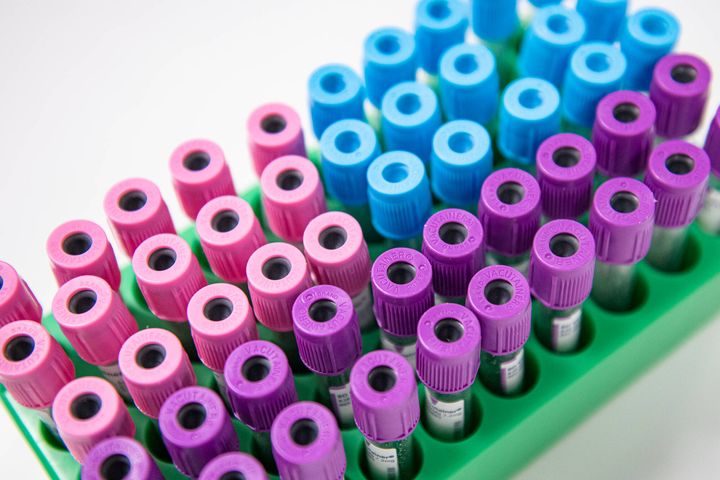
A blood test-based method of diagnosing NTM cervical lymphadenitis in children has been known for years, but its reliability has now been confirmed using real-world patient data. For the first time, the study also determined the cut-off values for a PPD response–that is, a positive test result–based on actual patient cases.
The research findings make it possible to move away from invasive research methods and antibiotics
The first findings regarding the suitability of this blood test for diagnosing NTM lymphadenitis in children were published ten years ago. Despite this, invasive procedures such as biopsies and surgical interventions are still frequently used in diagnosis and treatment.
“The fact that our study was able to confirm the reliability of the blood test for diagnostic purposes will hopefully pave the way for a move away from invasive procedures. Taking a biopsy from a child requires anesthesia, and the surgical procedure leaves a scar," says Anne Toivonen, a specialist in clinical microbiology.
In addition to the continued use of invasive diagnostic methods, lymphadenitis is often treated with antibiotics before the diagnosis is confirmed. NTM cervical lymphadenitis in children resolves on its own, and treatment usually only involves monitoring. Once the cause of the infection has been confirmed by a blood test, there is no need for antibiotics.
In Finland, NTM cervical lymphadenitis is rare in children. A symptom of lymphadenitis is a lump that appears on the neck within a short period of time.
The blood test can also be used to determine a child's vaccination status
The BCG vaccine produces a positive result in the blood test used to diagnose NTM lymphadenitis. This means that blood test-based diagnostic methods can be used in non-BCG-vaccinated children. In Finland, the BCG vaccine has been given only to high-risk groups since 2006.
“In ambiguous cases, our findings also make it possible to use the same blood test to determine whether a child has been vaccinated,” Toivonen says.
The study data consisted of test results and clinical data from 939 pediatric patients, all of whom had been tested at HUS between 2011 and 2015. The data set identified 45 children with NTM cervical lymphadenitis. Of these cases, 15 were confirmed by culture, and the remaining 30 were diagnosed based on clinical evaluation, histology, and an elevated PPD response. All 45 children with a diagnosis were included in the study group for the purpose of calculating the PPD cut-off value. The control group consisted of 141 healthy, non-BCG-vaccinated children with recent contact with a mycobacterium tuberculosis-positive case. As these children had not been diagnosed with tuberculosis—the condition for which the blood test under review was originally developed—they comprised a suitable control group for normal PPD values.
The study was published in the Journal of Pathology, Microbiology and Immunology.
Research article: The Use of Purified Protein Derivative (PPD) Response in Elispot IGRA for the Diagnosis of Nontuberculous Mycobacterial Cervical Lymphadenitis
In university hospitals research is part of treatment: new research outcomes make treatment practises more efficient and help focus treatments correctly. We work in close collaboration with the University of Helsinki and other universities, and we publish ca 3,000 peer-reviewed research articles annually.
Today’s research provides better care in the future.
The HUS media service is available for the media Mon–Thu 10:00 a.m.–4:00 p.m. and Fri 10:00 a.m.–3:00 p.m., tel. 050 427 2875, or via e-mail: viestinta@hus.fi.
Contacts
Anne ToivonenSpecialist in Clinical MicrobiologyHUS
Tel:050 4408375anne.toivonen@hus.fiAbout HUS
HUS Helsinki University Hospital is the biggest provider of specialized healthcare in Finland. Our high expertise is internationally recognized and accredited. As a university hospital, we are on the cutting edge of developing and evaluating our treatment methods and activities.
HUS treats almost 700,000 patients every year. Our more than 27,000 professionals work to provide the best possible care for our patients. We are responsible for organizing specialized health care in the Uusimaa region. The treatment of many rare and difficult diseases in Finland has been centralized to HUS as well.
HUS – Leading healthcare
The HUS media service is available for the media Mon–Thu 10:00 a.m.–4:00 p.m. and Fri 10:00 a.m.–3:00 p.m., tel. 050 427 2875, or via e-mail: viestinta@hus.fi.
hus.fi/en
Alternative languages
Subscribe to releases from HUS
Subscribe to all the latest releases from HUS by registering your e-mail address below. You can unsubscribe at any time.
Latest releases from HUS
HUS-sammanslutningens styrelse sammanträder den 17 augusti 202614.8.2026 11:09:41 EEST | Pressmeddelande
HUS-sammanslutningens styrelse sammanträder måndagen den 17 augusti 2026 för att behandla bland annat verksamheten och ekonomin för januari–juni 2026 samt särskilda anslag och personalförmåner i det preliminära budgetförslaget för 2027. Föredragningslistan för mötet finns här. Sammanslutningens styrelse leder HUS verksamhet, förvaltning och ekonomi. Sammanslutningens styrelse har 17 ledamöter och av dem är två företrädare för Helsingfors universitet. Sammanslutningens styrelse sammanträder cirka en gång per månad. HUS medietjänst betjänar medier måndag–torsdag kl. 10–16, fredag kl. 10–15 på numret 050 427 2875 eller per e-post på viestinta@hus.fi. Se avvikande öppettider.
HUSin yhtymähallitus kokoontuu 17.8.202614.8.2026 11:09:41 EEST | Tiedote
HUSin yhtymähallitus kokoontuu maanantaina 17.8.2026 käsittelemään mm. tammi-kesäkuun 2026 toimintaa ja taloutta sekä vuoden 2027 alustavan talousarvioesityksen erillismäärärahoja ja henkilöstöetuuksia. Kokouksen esityslistan pääset lukemaan täältä. Yhtymähallitus johtaa HUSin toimintaa, hallintoa ja taloutta. Yhtymähallituksessa on 17 jäsentä, joista kaksi on Helsingin yliopiston edustajia. Yhtymähallitus kokoontuu noin kerran kuukaudessa. HUSin mediapalvelu palvelee mediaa ma–to klo 10–16, pe klo 10–15 numerossa 050 427 2875 tai sähköpostitse viestinta@hus.fi. Katso poikkeusaukioloajat
Föräldrarnas låga inkomstnivå och utbildning kan påverka risken för allvarliga bakterieinfektioner hos barn10.8.2026 09:34:12 EEST | Pressmeddelande
Risken för att barn ska drabbas av en allvarlig bakterieinfektion är något högre i familjer där föräldrarnas inkomstnivå och särskilt moderns utbildningsnivå är lägre. Resultatet bygger på den första finländska registerstudien som omfattar hela befolkningen, där omfattande nationella data om smittsamma sjukdomar och socioekonomiska förhållanden kombinerats.
Vanhempien alhainen tulotaso ja koulutus voivat vaikuttaa lasten vakavien bakteeri-infektioiden riskiin10.8.2026 09:34:12 EEST | Tiedote
Lasten riski sairastua vakavaan bakteeri-infektioon on hieman suurempi perheissä, joissa vanhempien tulotaso ja erityisesti äidin koulutus on matalampi. Tulos perustuu ensimmäiseen koko väestön kattavaan suomalaiseen rekisteritutkimukseen, jossa yhdistettiin laajat kansalliset tartuntatauti- ja sosioekonomiset aineistot.
Low parental income and education level may be linked to the risk of severe bacterial infections in children10.8.2026 09:34:12 EEST | Press release
The risk of severe bacterial infection is slightly increased in families with lower parental income and, in particular, lower maternal education level. The results are based on the first Finnish registry study that covered the entire population, combining extensive national records on infectious diseases and socio-economic data.
In our pressroom you can read all our latest releases, find our press contacts, images, documents and other relevant information about us.
Visit our pressroom