
STUK’s monitoring showed that the radiation situation in Finland remained normal and safe in 2025
17.8.2026 10:11:08 EEST | Säteilyturvakeskus (STUK) | Press release
The results of STUK’s environmental monitoring show that the radiation situation in the Finnish environment remained stable and safe in 2025. The environmental impacts of the operations of the Loviisa and Olkiluoto nuclear power plants on the radiation situation were also insignificant. Extensive and continuous monitoring ensures that any changes are detected quickly and that the authorities have up-to-date information on the radiation situation in the environment throughout the country.
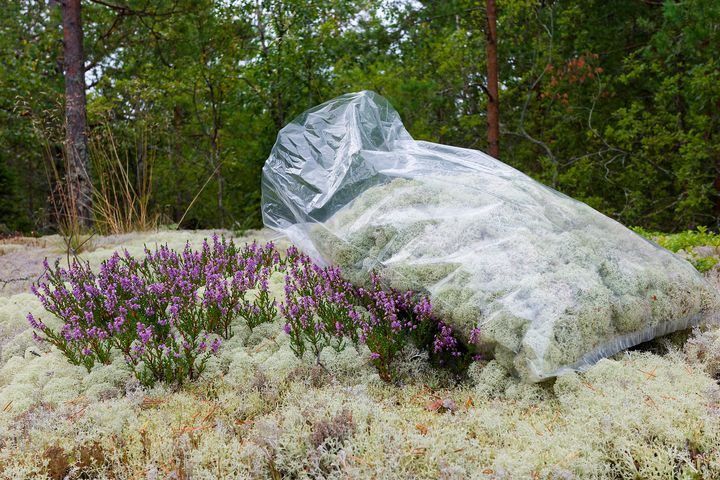
The Radiation and Nuclear Safety Authority (STUK) monitors the radiation situation in the environment through a monitoring programme which includes continuous measurement of external radiation and monitoring of radioactive substances in air, fallout, water, food and people. The aim of monitoring is to quickly detect any changes in the radiation situation and ensure that the living environment in Finland remains safe.
STUK’s radiation monitoring is an important part of the safety of society. On the basis of the results from 2025, it can be said that radioactive substances in the environment and the operation of nuclear power plants do not cause harmful radiation.
The monitoring network operated reliably
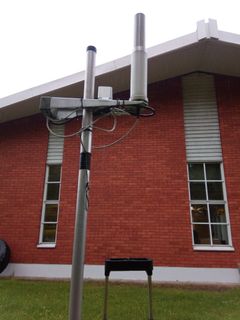
The automatic external radiation monitoring network measures radiation continuously practically throughout Finland. Last year, more than 97 per cent of the measurement results from 255 measurement points were successfully transmitted to STUK’s monitoring data management system. The missing data was due to individual device or telecommunication malfunctions. The measurement stations automatically trigger an alarm if there is anything abnormal in the radiation situation.
Last year, the monitoring network triggered three alarms. They were not related to changes in the radiation situation in the environment. Two alarms were due to industrial radiography which was being performed near the measurement station and one due to a technical error in the measurement station’s alarm function.
Environmental radioactivity continues to decrease
The artificial radioactive substances in the environment mainly originate from the Chernobyl nuclear power plant accident in 1986 and the atmospheric nuclear tests in the 1950s and 1960s. The effect of radioactive substances derived from them on the radiation situation continues to decrease.
Very small amounts of artificial radioactive substances, the origin of which could not be determined with certainty, were detected in the samples collected from the outdoor air in two cases during the year. However, the observed concentrations were so low that they had no significance for human health or the environment.
Radioactive cesium-137 from the Chernobyl accident was also still detected in the samples collected from the Baltic Sea, but the concentrations have decreased steadily in the same way as in other environmental samples.
Nuclear power plants have very low environmental impacts
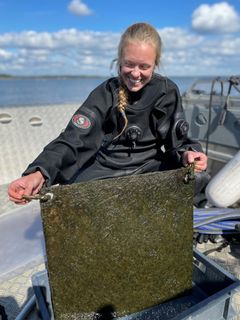
STUK monitors the environment of the Loviisa and Olkiluoto nuclear power plants particularly closely. In 2025, STUK’s own monitoring programme included approximately 130 samples collected from the terrestrial and marine environments of Loviisa and 130 from the terrestrial and marine environments of Olkiluoto. The samples were analysed in STUK’s own laboratory
The samples of the marine environment included small amounts of radioactive substances that originate from the power plants. The observed radionuclides corresponded to the emissions reported by the plants and to the observations made in previous years. The concentrations were very low and had no significance for the radiation exposure of people or the environment.
The radioactive substances observed in soil and plant samples in the vicinity of nuclear power plants also mainly originated from the fallout of the Chernobyl accident. The concentrations of cesium-137 and strontium-90 were in the same magnitude as elsewhere in Finland and corresponded to the results of previous years.
The radioactivity measurements of people living in the vicinity of the power plants did not detect any radioactive substances from the power plants.
Independent monitoring strengthens trust
Nuclear power companies also monitor the state of the environment near the nuclear power plants and have their own environmental monitoring programmes. In nuclear power companies’ own environmental monitoring, the results of samples from both the marine and terrestrial environments corresponded well to STUK’s independent measurement results.
On the basis of the 2025 environmental monitoring, the radiation dose caused by artificial radioactive substances to Finns was less than 0.02 millisieverts nationwide. This is an extremely small amount compared to the average annual radiation dose of Finns, which is approximately 5.9 millisieverts.
Keywords
Contacts
Sinikka VirtanenHead of LaboratorySTUK
Tel:0975988556sinikka.virtanen@stuk.fiMedia contacts
Tel:+358(10)8504761Images
Links
Alternative languages
Subscribe to releases from Säteilyturvakeskus (STUK)
Subscribe to all the latest releases from Säteilyturvakeskus (STUK) by registering your e-mail address below. You can unsubscribe at any time.
Latest releases from Säteilyturvakeskus (STUK)
Geografisk information stöder beslutsfattandet i en nödsituation med strålrisk16.9.2026 14:29:15 EEST | Pressmeddelande
Strålsäkerhetscentralen (STUK) har i det EU-finansierade IDEAMETA-projektet utvecklat nya digitala lösningar för att skapa en lägesbild av nödsituationer med strålrisk samt för att sammanställa och dela lägesinformation. Utvecklingsarbetet gör bedömningen av strålningssituationen snabbare och förbättrar Finlands förmåga att svara på kärn- och strålningsolyckor.
Paikkatieto tukee päätöksentekoa säteilyvaaratilanteessa16.9.2026 14:29:15 EEST | Tiedote
Säteilyturvakeskus (STUK) on kehittänyt EU-rahoitteisessa IDEAMETA-hankkeessa uusia digitaalisia ratkaisuja säteilyvaaratilanteiden tilannekuvan muodostamiseen ja tilannetiedon kokoamiseen ja jakamiseen. Kehitystyö nopeuttaa säteilytilanteen arviointia ja parantaa Suomen kykyä vastata ydin- ja säteilyonnettomuuksiin.
Mycket små mängder radioaktivt kobolt i luften i Imatra i augusti10.9.2026 13:32:57 EEST | Pressmeddelande
Strålsäkerhetscentralen (STUK) upptäckte radioaktivt kobolt i ett luftpartikelprov som samlades in i Imatra i augusti.
Imatran ilmassa oli elokuussa hyvin vähän radioaktiivista kobolttia10.9.2026 13:32:57 EEST | Tiedote
Säteilyturvakeskus havaitsi Imatralla elokuussa kerätyissä ilman hiukkasnäytteessä radioaktiivista kobolttia.
IAEA:n tiedote: Kansainvälinen atomienergiajärjestö IAEA arvioi Suomen ydin- ja säteilyturvallisuusvalmiutta3.9.2026 12:01:51 EEST | Tiedote
Kansainvälisen atomienergiajärjestön (IAEA) asiantuntijaryhmä on päättänyt kymmenen päivää kestäneen arviointitehtävänsä, jonka aikana se arvioi Suomen ydin- ja säteilyvaaratilanteisiin varautumista ja valmiusjärjestelyjä. Emergency Preparedness Review (EPREV) -arviointi tehtiin Suomen hallituksen pyynnöstä, ja sen käytännön järjestelyistä Suomessa vastasi Säteilyturvakeskus (STUK).
In our pressroom you can read all our latest releases, find our press contacts, images, documents and other relevant information about us.
Visit our pressroom