
Finnish Meteorological Institute helps ESA yield information about photosynthesis from space
2.9.2026 10:28:16 EEST | Ilmatieteen laitos | Press release
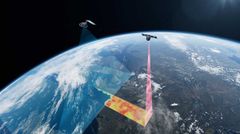
The European Space Agency’s FLEX photosynthesis mission is scheduled for launch on 15 September. The Finnish Meteorological Institute has developed methods for FLEX mission that help account for atmospheric effects and enable accurate estimates of the fluorescence signal linked to photosynthesis.
Photosynthesis drives plant growth and plays a central role in the exchange of carbon between the land and the atmosphere. ESA’s Fluorescence Explorer (FLEX) mission will measure solar-induced chlorophyll fluorescence, or SIF – a very weak glow emitted by plants when they absorb sunlight and closely linked to photosynthetic activity.
While satellites have monitored the extent and greenness of vegetation for decades, FLEX will provide information more directly related to how plants are functioning. Its FLORIS instrument will measure vegetation fluorescence in much greater detail, complemented by observations from the Sentinel-3 satellite which will fly in tandem with FLEX.
Finnish Meteorological Institute helps separate the vegetation signal from the atmospheric contribution
Measuring plant fluorescence from space is challenging because the weak signal from plants is hidden within the Earth’s atmospheric contribution. Earth’s atmosphere changes, and so does the light we observe from the satellite.
“It's a bit like trying to spot a distant candle in daylight: the plant signal is very faint compared to all the sunlight. Our task is to characterize these atmospheric effects accurately so that reliable information about vegetation and photosynthetic activity can be derived from the observations,” says Neus Sabater, Senior Scientist at the Finnish Meteorological Institute.
Over several years of ESA project work, the Finnish Meteorological Institute has developed methods for characterizing atmospheric effects and separating them from the signal originating at the Earth’s surface. This atmospheric correction is essential for deriving accurate estimates of vegetation fluorescence and photosynthetic activity from FLEX observations.
The Finnish Meteorological Institute will also contribute to validating FLEX observations once the satellite becomes operational. The Sodankylä Supersite in northern Finland, jointly developed by ESA and the Finnish Meteorological Institute for satellite calibration and validation, will provide independent ground-based reference measurements.
New information on vegetation and the carbon cycle
More accurate observations of photosynthetic activity can improve understanding of how vegetation responds to drought, heat and other environmental stresses. The observations are relevant to research on climate change, the carbon cycle, ecosystem health and food production.
FLEX can also improve understanding of how much carbon terrestrial ecosystems take up from the atmosphere and support the development and evaluation of climate and carbon-cycle models. This can help scientists understand both how vegetation responds to a changing climate and how it influences the climate through the carbon cycle.
Keywords
Contacts
Senior Scientist Neus Sabater, Finnish Meteorological Institute, tel. +358 46 922 5120, neus.sabater@fmi.fi
Senior Scientist Pekka Kolmonen, Finnish Meteorological Institute, tel. +358 50 380 3244, pekka.kolmonen@fmi.fi
Senior Scientist Timo Virtanen, Finnish Meteorological Institute, tel. +358 50 421 2360, timo.h.virtanen@fmi.fi
Images
Links
Alternative languages
Subscribe to releases from Ilmatieteen laitos
Subscribe to all the latest releases from Ilmatieteen laitos by registering your e-mail address below. You can unsubscribe at any time.
Latest releases from Ilmatieteen laitos
Poutainen syyssää väistyy – sää muuttuu epävakaisemmaksi ja pilvisyys lisääntyy22.10.2026 14:39:02 EEST | Tiedote
Sää on viikonloppuna epävakaisuudesta huolimatta tavanomaista lämpimämpää ajankohtaan nähden. Vielä lähiöinä kuuraa voi esiintyä paikoin maan keski- ja pohjoisosassa.
Eteläinen ilmavirtaus pitää sään tavanomaista lämpimämpänä koko maassa19.10.2026 15:02:18 EEST | Tiedote
Suomessa sää on tällä viikolla 2–5 astetta ajankohdan keskiarvoa lämpimämpi. Ajankohtaan nähden sää on lämpimintä Lapissa. Ennusteissa ei näy merkkejä merkittävästä viilenemisestä loppukuun aikana. Alkuviikon aurinkoisina pakkasöinä voi kuitenkin esiintyä aamuliukkauksia maan etelä- ja keskiosassa.
Syyskuu 2026 oli toiseksi lämpimin syyskuu maailmanlaajuisesti – 1,5 asteen raja ylittyi toista kuukautta peräkkäin12.10.2026 05:00:00 EEST | Tiedote
EU:n Copernicus-ilmastopalvelun mukaan vuoden 2026 syyskuu oli maailmanlaajuisesti mittaushistorian toiseksi lämpimin syyskuu. Syyskuu oli myös toinen peräkkäinen kuukausi vuonna 2026, jolloin maapallon keskilämpötila oli 1,5 astetta korkeampi esiteollisen ajan keskiarvoon verrattuna.
Viikonloppu alkaa sateisena ja tuulisena – lauantaina ensilumi mahdollista Koillismaalla8.10.2026 13:45:47 EEST | Tiedote
Perjantaina lännestä saapuva matalapaine tuo runsaita sateita maan etelä- ja keskiosiin. Perjantaille on annettu myös tuulivaroituksia merialueille.
// KORJATTU TIEDOTE // otsikkoa muutettu // Arktisen merijään minimilaajuus oli tavanomainen, mutta peittävyys tavallista pienempi7.10.2026 14:01:43 EEST | Tiedote
Tänä vuonna Arktisen merijään pienin laajuus on ollut normaali, mutta maaliskuussa mitattu maksimilaajuus oli ennätyksellisen pieni. Lisäksi Euroopan puoleisella alueella jään peittävyys Pohjoisnavalle asti on ollut poikkeuksellisen pientä ja avoveden osuus tavallista suurempaa.
In our pressroom you can read all our latest releases, find our press contacts, images, documents and other relevant information about us.
Visit our pressroom