
New gene test developed at HUS helps in prescribing medicines
9.9.2022 07:39:51 EEST | HUS | Press release
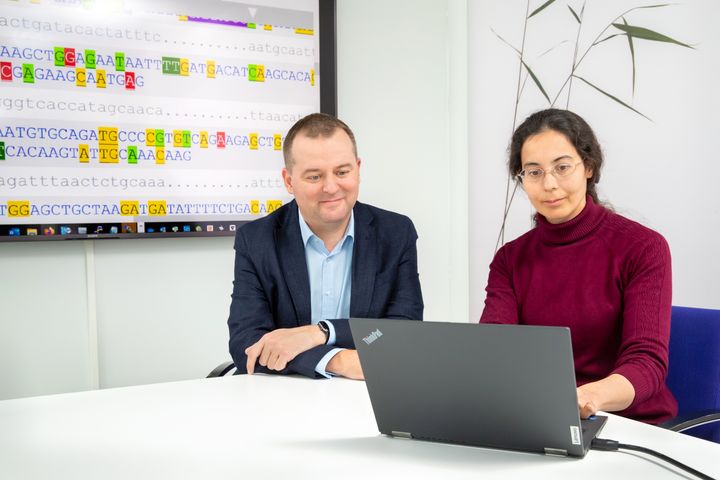
Not all medicines are suitable for everyone. With some medicines, the human genes determine what kind of effect the medicine will have. Before prescribing this type of medicines, it may be necessary to perform a gene test on the patient to help the physician select the medicine and determine the dose correctly.
Previously, HUS Diagnostic Center always tested one gene with an impact on pharmacotherapy at a time. The new test, implemented in January, can be used to simultaneously examine all those gene variants associated with medicines that are currently clinically relevant.
This way, information about the patient is also collected in advance for possible subsequent pharmaceutical treatments. Treatment can also be started sooner when there is no need to wait for the results of the new gene test. The test results may affect both the choice of the medicine and the dose.
“More than one half of HUS’s patients receive medication in which it would be beneficial to take into account genetic variation,” says Mikko Niemi, Professor of Pharmacogenetics at the University of Helsinki and Head Physician at HUS Diagnostic Center. He was in charge of the development of the new gene test.
The test can be modified if new research so requires
The testing begins with the collection of a blood sample from which DNA is isolated. The genes in the DNA are analysed using a laboratory method developed at HUS Diagnostic Center and a computer program developed for this test.
“At the moment, the customer receives the result in about a week,” explains Arto Orpana, Chief Clinical Chemist from HUS, who was involved in creating the test.
New features are constantly added to the test, which currently provides information on 12 different genes. The test has been built to allow modifications if medical research provides new information on the effect of genes on the efficacy of medicines.
The samples are examined at the Genetics laboratory of HUS Diagnostic Center. No other party in Finland conducts such comprehensive research on genes affecting pharmacotherapy. A special feature of the test is its advanced interpretation of results to facilitate clinical work. The test is available at HUS Diagnostic Center for the whole of Finland.
The new gene test provides information only on the suitability of medicines. In other words, it does not reveal any hereditary diseases or other characteristics.
Cutting-edge technical implementation
So far, the new genetic test has been performed on 2,000 samples at HUS Diagnostic Center. Most of the tests have been performed on cancer patients. Other groups have included patients with depression, inflammatory bowel diseases and skin diseases.
The new test developed at HUS Diagnostic Center is internationally unique. Testing can now be done even faster and it is cheaper.
“We have managed to make the costs low. These tests are often expensive,” Niemi says. “In terms of its technical implementation, the test is cutting-edge.”
A system is currently being built in the Apotti patient information system to automatically check the results of the patient's gene test. For example, the system may suggest that the physician treating the patient should prescribe a certain dose or select another medicine.
HUS has also published an online Pharmacogenetics Guide for prescribers of medicines.
More information for the media:
Contacts
Mikko Niemi, Professor of Pharmacogenetics, Head Physician
+358 50 428 0998, mikko.niemi(at)hus.fi
Arto Orpana, Chief Clinical Chemist
+358 427 0647, arto.orpana(at)hus.fi
Images

About HUS

At HUS Helsinki University Hospital about 680 000 patients receive medical care annually. We have almost 27,000 professionals working for the best of all patients. We are responsible for providing specialized health care for the residents of our 24 member municipalities. In addition, the treatment of many rare and severe diseases is nationally centralized to HUS.
HUS is the biggest health care provider and the second largest employer in Finland. Our expertise is internationally recognized and accredited. As a university hospital, we continuously develop and evaluate our treatment methods and activities.
Subscribe to releases from HUS
Subscribe to all the latest releases from HUS by registering your e-mail address below. You can unsubscribe at any time.
Latest releases from HUS
Genetiska undersökningar kan avslöja orsaken till plötslig oförklarlig död hos unga14.9.2026 09:18:15 EEST | Pressmeddelande
Den bakomliggande orsaken till plötslig oförklarlig död hos unga kan vara en sällsynt ärftlig sjukdom som nödvändigtvis inte kommer fram i vanliga undersökningar. Genetiska undersökningar är en viktig del särskilt i utredningen av plötsliga oväntade dödsfall hos unga. Genetiska undersökningar kan också bidra till att identifiera släktingar som omfattas av risken och förebygga eventuella allvarliga hjärthändelser.
Geenitutkimus voi paljastaa syyn nuoren selittämättömälle äkkikuolemalle14.9.2026 09:18:15 EEST | Tiedote
Nuoren selittämättömän äkkikuoleman taustalla voi olla harvinainen perinnöllinen sairaus, joka ei välttämättä tule esiin tavanomaisissa tutkimuksissa. Geenitutkimus on tärkeä osa erityisesti nuorten odottamattomien äkkikuolemien syyn selvittämisessä. Geenitutkimus voi myös auttaa tunnistamaan riskissä olevia sukulaisia ja ehkäistä mahdollisia vakavia sydäntapahtumia.
Genetic testing may reveal the cause of sudden death in a young person14.9.2026 09:18:15 EEST | Press release
The reason for an unexplained sudden death of a young person may be a rare hereditary disease that can remain undetected in standard examinations. Genetic testing is an important part of investigating the cause of an unexpected sudden death, especially in adolescents. Genetic testing may also help to identify relatives who are at risk of sudden death, and to prevent possible severe cardiac events.
Svår RS-virusinfektion kan öka risken att barnet drabbas av astma i den tidiga barndomen8.9.2026 07:55:55 EEST | Pressmeddelande
En svår RS-virusinfektion i spädbarnsåldern ser ut att öka risken för pipande andning och astma i den tidiga barndomen. I en nyligen publicerad studie identifierades också ett nytt genområde som är förknippat med benägenheten att drabbas av RS-virusinfektion.
Vaikea RSV-infektio voi lisätä lapsen riskiä sairastua astmaan varhaislapsuudessa8.9.2026 07:55:55 EEST | Tiedote
Vauvana sairastettu vakava RSV-infektio näyttää lisäävän hengityksen vinkunan ja astman riskiä varhaislapsuudessa. Vastajulkaistussa tutkimuksessa tunnistettiin myös uusi geenialue, joka liittyy alttiuteen sairastua RSV-infektioon.
In our pressroom you can read all our latest releases, find our press contacts, images, documents and other relevant information about us.
Visit our pressroom