Invitation to press conference on Tue 13th February: Schjerfbeck and fashion in focus at Villa Gyllenberg next spring
16.1.2024 08:45:00 EET | Villa Gyllenberg | Press invitation
The spring exhibition at Villa Gyllenberg brings together stylish fashion from the past and the art of Helene Schjerfbeck and other artists from her time. Schjerfbeck & Fashion – Art and Costume History 1880–1950 is one of the first exhibitions in Finland to present historical fashion and paintings side by side. The exhibition will run from 14 February to 9 June 2024.
The press conference will take place at Villa Gyllenberg on Tuesday 13th February at 11 a.m.
Please let us know if you are attending by e-mailing Siiri Oinonen, Head of Customer and Program Services, siiri.oinonen@gyllenbergs.fi
Schjerfbeck and fashion
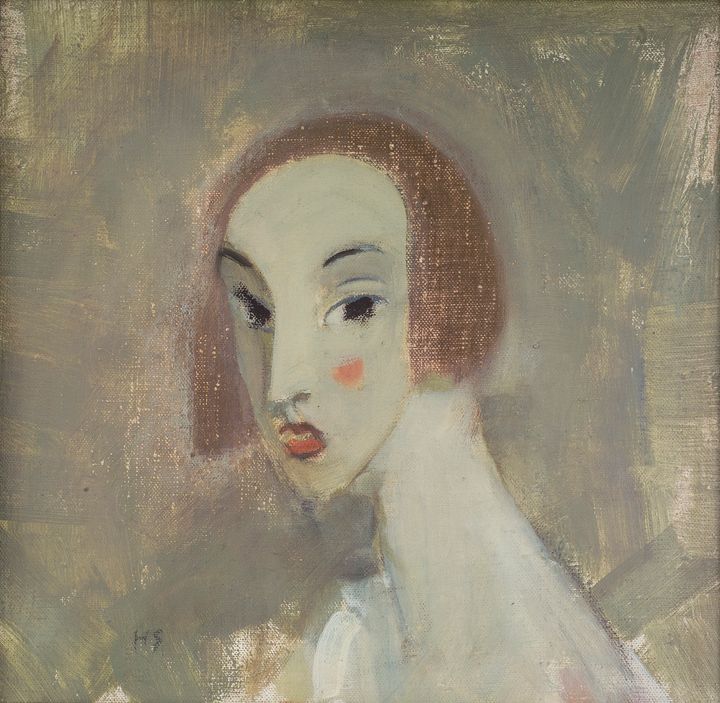
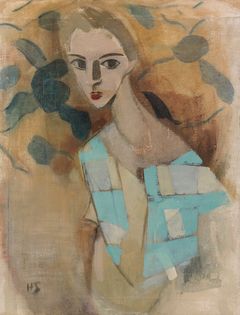
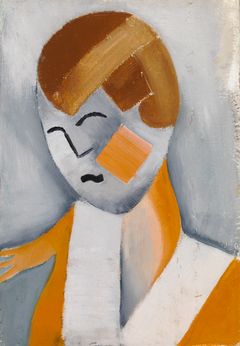
Helene Schjerfbeck (1862–1946) loved both painting and fashion, and in her portraits the model’s attire was an integral part of the work. The birth of modern fashion coincided with Helene Schjerfbeck’s career, which spanned from the 1870s to the 1940s.
Schjerfbeck was particularly fond of French-style apparel, and French fashion magazines served as inspiration for her paintings as well. The coolly elegant figures of the women in the fashion photos, with their long necks and reddened lips, merged into the image of modern femininity embodied in works of art. Schjerfbeck’s enthusiasm for fashion is also evident in her letters to her cousin Dora Estlander, who was the model for the painting Elegant Lady (Dora), (ca. 1928). The letters from 1922–1945 are now owned by the Signe and Ane Gyllenberg Foundation, and the research conducted for the exhibition is partially based on this source material.
“We want to highlight the side of Helene Schjerfbeck, and many other Finnish artists too, that loved both art and fashion. Often thought of as superficial and transient, fashion is commonly seen as the opposite of art, which is perceived as edifying and timeless. However, modern art and modern fashion are intertwined in many ways. Schjerfbeck's art and her correspondence illustrate this perfectly,” says Lotta Nylund, Chief Curator at Villa Gyllenberg.
Historical glamour
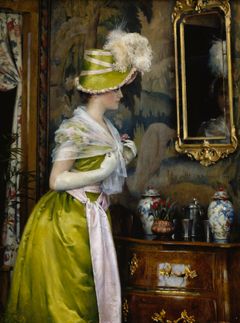
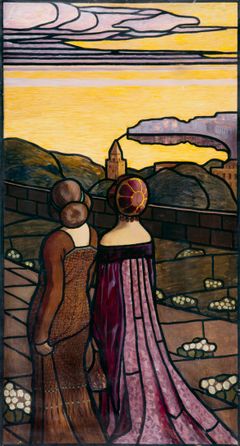
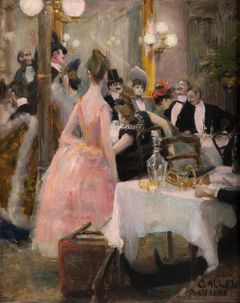
Especially in portrait art, clothing has played a key role. Alongside Schjerfbeck’s works, the exhibition presents works by more than twenty other Finnish artists related to fashion and costume history. For example, Albert Edelfelt (1854–1905) and Gunnar Berndtson (1854–1895) were inspired by the world of fashion, and costumes and textiles are central to creating atmosphere and impression in their works.
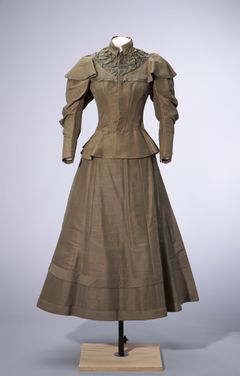
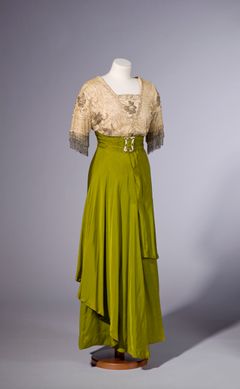
In addition to fine art, the exhibition presents about thirty costumes of the period, from leisurewear to brilliant evening dresses. The exhibition also highlights the history of costume making and atelier fashion.
“We want the exhibition visitors to see the costumes of the past and learn about the cultural history of fashion. Costumes communicate the identity and social status of their wearers, and the history of costumes helps to interpret works of art and the people appearing in them,” Nylund explains.
The exhibition will also feature an interpretation of the outfit that can be seen in Schjerfbeck’s painting Dark Lady (1929). Irma Romero, a dressmaker and designer specialising in vintage fashion, has used authentic materials and techniques to recreate the outfit, which exudes Japonism and the style of Coco Chanel.
“The outfit brings Schjerfbeck's painting from a hundred years ago to life in a unique way and presents to visitors an interpretation of the fashion that inspired the artist,” Nylund says.
Urban life and leisure
Many artists of the era were inspired by the world of fashion and used it as a way of reflecting modern life. Urbanisation and the vitalist movement, which promoted health and vitality, transformed lifestyles. Changes in fashion enabled women to lead freer and more active lifestyles than before, as the disappearance of corsets and bustles revolutionised sports and recreation. In the 1920s, attitudes towards make-up became more permissive, and hair fashion was renewed by the bob cut. The catalogues, display windows, fashion magazines and advertisements of fashion boutiques and department stores gave birth to a new kind of visual culture that was also reflected in art.
“Modern people appeared superficial and distant to Schjerfbeck, but also artistically intriguing. The masked nature of the faces depicted in her portraits is reminiscent of fashion pictures, while at the same time bringing to mind works by the masters of modern art, such as Pablo Picasso and Piet Mondrian," says art historian Marja Lahelma, one of the curators of the exhibition.
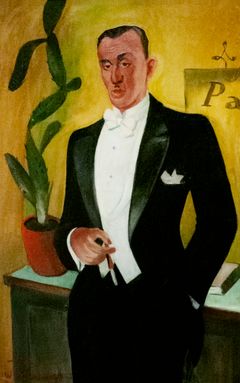
The focus of the exhibition is women’s fashion, as the changes in men’s fashion between the 1880s and 1950s were relatively small, and the imagery related to men’s fashion is quite limited. Nevertheless, the selected male portraits embody modern, urban masculinity in an interesting way. Several works, such as the portrait of author Olavi Paavolainen (1928) by Väinö Kunnas (1896–1929), have a dashing dandy-like nature. Jalmari Ruokokoski (1886–1936) and Tyko Sallinen (1879–1955), both considered bohemian artists, chose to portray themselves as well-groomed gentlemen. Through their portraits and self-portraits, the artists captured the aesthetics, manners and customs of the modern world.
The exhibition features 35 dresses, 20 works by Schjerfbeck and more than 40 works by other Finnish artists. Artists featured in the exhibition include: Hugo Backmansson, Gunnar Berndtson, Väinö Blomstedt, Yngve Bäck, Birger Carlstedt, Marcus Collin, Albert Edelfelt, Ragnar Ekelund, Akseli Gallen-Kallela, Olga Gummerus-Ehrström, Axel Haartman, Greta Hällfors-Sipilä, Eero Järnefelt, Erkki Koponen, Väinö Kunnas, Vilho Lampi, Yrjö Ollila, Jalmari Ruokokoski, Tyko Sallinen, Santeri Salokivi, Helene Schjerfbeck, Hugo Simberg, Venny Soldan-Brofeldt, Ilmari Vuori, Dora Wahlroos, Matti Warén, Torsten Wasastjerna and Maria Wiik.
The curators of the exhibition are art historian Marja Lahelma, fashion historian Katri Pyysalo and Villa Gyllenberg’s chief curator Lotta Nylund.
In connection with the exhibition, a richly illustrated book related to the theme of the exhibition will be published in Finnish and Swedish (Parvs Publishing Ltd). In addition to contributions by the exhibition’s curators and Irma Romero, the book includes articles by Ritva Koskennurmi-Sivonen, lecturer in craft studies and fashion theory, and Schjerfbeck expert Sue Cedercreutz-Suhonen. The exhibition is part of the 75th anniversary of the Signe and Ane Gyllenberg Foundation.
Contacts
Lotta Nylund, Chief Curator, Villa Gyllenberg, lotta.nylund@gyllenbergs.fi, +358 40 576 1753
Siiri Oinonen, Head of Customer and Program Services, siiri.oinonen@gyllenbergs.fi, +358 40 825 4763 (photos)
Exhibition Curator Marja Lahelma, marja.lahelma@helsinki.fi
Exhibition Curator Katri Pyysalo, katri.pyysalo@tampere.fi
Extended opening hours during the exhibition
Wed, Thu 12–17
Sat, Sun 11–17
Tour bookings
Address
Kuusisaarenpolku 11
00340 Helsinki
Keywords
Contacts
Lotta NylundVilla Gyllenberg
Tel:+358 40 576 1753lotta.nylund@gyllenbergs.fiSiiri OinonenVilla Gyllenberg
Tel:+358 40 825 4763siiri.oinonen@gyllenbergs.fiImages
Links
Villa Gyllenberg
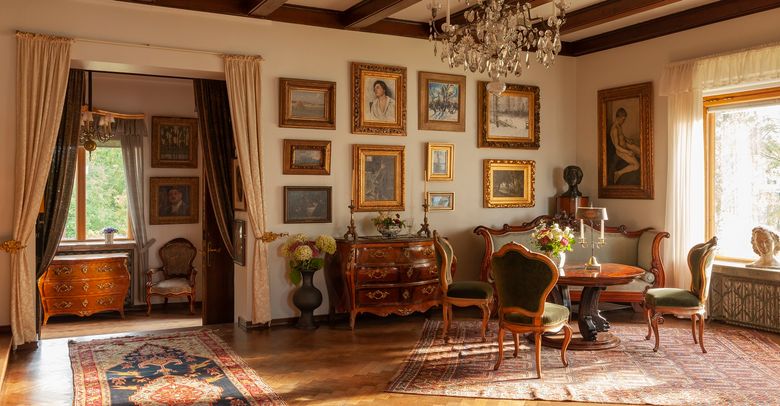
Villa Gyllenberg is a home and art museum situated on the island of Kuusisaari in Helsinki. The museum is kept by Signe and Ane Gyllenberg Foundation. Please check out the museum's web site for updated information about opening hours, admission, exhibitions and events.
Alternative languages
Subscribe to releases from Villa Gyllenberg
Subscribe to all the latest releases from Villa Gyllenberg by registering your e-mail address below. You can unsubscribe at any time.
Latest releases from Villa Gyllenberg
PÅMINNELSE: Pressvisning tor 8.10: Sällan visad värdefull privat konstsamling till Villa Gyllenberg30.9.2026 08:52:00 EEST | Pressinbjudan
Utställningen En glimt av Sampos samling som presenterar Sampos konstsamling öppnas på Villa Gyllenbergs konstmuseum den 10 oktober 2026. Ur försäkringsbolagets omfattande samling lyfts fram cirka 50 verk som mycket sällan har visats för allmänheten. Utställningen pågår under tiden 10.10.2026–14.2.2027. Pressvisning arrangeras på Villa Gyllenberg torsdagen den 8 oktober kl. 11. Anmälningar per e-post till publik- och programansvariga Siiri Oinonen siiri.oinonen@gyllenbergs.fi
MUISTUTUS: Kutsu mediatilaisuuteen 8.10: Harvoin nähty yksityinen arvotaidekokoelma esille Villa Gyllenbergiin30.9.2026 08:52:00 EEST | Kutsu
Sammon taidekokoelmaa esittelevä Kurkistus Sammon kokoelmaan -näyttely avautuu Villa Gyllenbergin taidemuseossa 10.10.2026. Vakuutusyhtiön laajasta kokoelmasta nostetaan esille noin 50 teosta, jotka ovat olleet hyvin harvoin yleisön nähtävillä. Näyttely on esillä 10.10.2026–14.2.2027. Mediatilaisuus järjestetään Villa Gyllenbergissä torstaina 8.10. klo 11. Ilmoittautumiset sähköpostitse yleisöpalveluvastaava Siiri Oinoselle siiri.oinonen@gyllenbergs.fi
REMINDER: Invitation to press viewing Thu Oct 8th: Villa Gyllenberg to present rarely exhibited private art collection30.9.2026 08:52:00 EEST | Press invitation
The exhibition A Glimpse of the Sampo Collection opens at the Villa Gyllenberg Art Museum on 10 October 2026. The exhibition will present approximately 50 works from the insurance company’s extensive art collection that have very rarely been seen by the public. The exhibition runs from 10 October 2026 to 14 February 2027. A press conference will be held at the Villa Gyllenberg Art Museum on Thursday 8 October at 11am. To register, please contact Siiri Oinonen, Head of Customer and Program Services, at siiri.oinonen@gyllenbergs.fi.
Sällan visad värdefull privat konstsamling till Villa Gyllenberg8.9.2026 08:48:00 EEST | Pressinbjudan
Utställningen En glimt av Sampos samling som presenterar Sampos konstsamling öppnas på Villa Gyllenbergs konstmuseum den 10 oktober 2026. Ur försäkringsbolagets omfattande samling lyfts fram cirka 50 verk som mycket sällan har visats för allmänheten. Utställningen pågår under tiden 10.10.2026–14.2.2027. Pressvisning arrangeras på Villa Gyllenberg torsdagen den 8 oktober kl. 11. Anmälningar per e-post till publik- och programansvariga Siiri Oinonen siiri.oinonen@gyllenbergs.fi
Harvoin nähty yksityinen arvotaidekokoelma esille Villa Gyllenbergiin8.9.2026 08:48:00 EEST | Kutsu
Sammon taidekokoelmaa esittelevä Kurkistus Sammon kokoelmaan -näyttely avautuu Villa Gyllenbergin taidemuseossa 10.10.2026. Vakuutusyhtiön laajasta kokoelmasta nostetaan esille noin 50 teosta, jotka ovat olleet hyvin harvoin yleisön nähtävillä. Näyttely on esillä 10.10.2026–14.2.2027. Mediatilaisuus järjestetään Villa Gyllenbergissä torstaina 8.10. klo 11. Ilmoittautumiset sähköpostitse yleisöpalveluvastaava Siiri Oinoselle siiri.oinonen@gyllenbergs.fi
In our pressroom you can read all our latest releases, find our press contacts, images, documents and other relevant information about us.
Visit our pressroom