
How does local biodiversity affect the development of the human immune system?
5.9.2024 13:00:00 EEST | Suomen ympäristökeskus | Press release
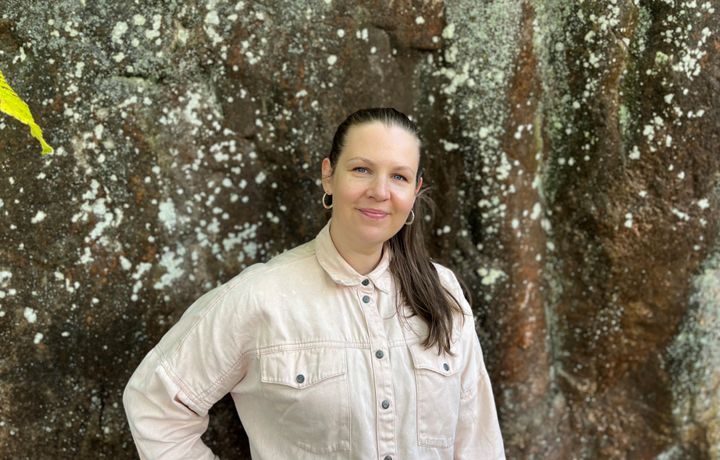
Jenni Lehtimäki, a senior research scientist at the Finnish Environment Institute (Syke), has received €1.73 million in research funding from the European Research Council (ERC). The research aims to investigate how organisms other than bacteria influence the development of the human immune system and children’s health.
An ecological perspective on immune system development research
Previous studies have shown that extensive exposure to natural bacteria is crucial for the normal development of the immune system and reduces the risk of immune-mediated diseases later in life. While the role of bacteria is well known, they represent only a small proportion of all organisms. Lehtimäki’s central research question is how different organisms, from archaea to vertebrates, affect the development of the human immune system and health. As a child’s immune system develops, it encounters skin, saliva, faeces, hair, and other parts produced by various organisms. The role of these in the development of the immune system and the child’s future health is still largely unknown.
The research project will measure which organisms babies are exposed to during their first year of life and the effects this has on the development of the immune system and the later risk of developing immune-mediated diseases. Additionally, the project will examine changes in the biodiversity of children’s home environments over the past forty years and their connections to immune-mediated diseases using a research dataset containing about 2 million children. These approaches enable the study of the health effects of biodiversity on an unprecedented scale.
“The idea that humans are connected to the entire biosphere through our immune system is fascinating but also frightening. If our health depends on early encounters with various organisms, what could the decline in biodiversity or urbanisation of human habitats lead to?” asks Jenni Lehtimäki.
“To my knowledge, such research setups have not been implemented anywhere else in the world. My multidisciplinary project brings an ecological perspective to human health research. I believe this perspective can enrich traditional medical research,” says Lehtimäki.
“Biodiversity is important to humanity because it enables many basic life necessities such as food production. However, my project asks whether our connection to biodiversity is much more intimate than previously thought. I expect the research to provide new insights into the significance of biodiversity for human health,” Lehtimäki continues.
The multidisciplinary expertise, data, and collaboration of Syke and THL enable the research
The connection between various organisms and the health of young children is studied using DNA-based biodiversity monitoring methods, whose use and expertise have been developed at Syke in recent years. Environmental DNA (eDNA) can be studied from various samples using current laboratory and bioinformatic methods. The project will collect eDNA samples from the homes and local environments of hundreds of babies during their first year of life.
The project also utilises long-term monitoring data on biodiversity. This data will be combined for the first time with Finnish health data using the comprehensive children’s health registry data from the Finnish Institute for Health and Welfare (THL).
“This research project would not be possible without the long-term foundational work done by researchers, research institutions, and authorities. Valuable research always builds on high-quality research data,” notes Lehtimäki.
Prestigious funding enables long-term, innovative research
“I am immensely pleased with the significant funding I have received for my research. The funding enables ambitious and long-term research on what I consider a very important topic. It is great to establish a multidisciplinary research group to delve into the connection between biodiversity and human health,” says Lehtimäki.
Lehtimäki has succeeded in research funding competitions for the second time this year. In June, she was awarded the prestigious Research Fellow funding from Research Council of Finland for four years.
Jenni Lehtimäki’s funding is the first ERC funding for the Finnish Environment Institute.
Jenni Lehtimäki
- Senior Researcher at the Finnish Environment Institute’s Built environment solutions unit
- PhD in 2017 from the University of Helsinki, dissertation on the biodiversity hypothesis, field of study in ecology and evolutionary biology
- Research interests include the microbiome of the environment and the human body and their interconnections, the link between lifestyle diseases and living environments, and the significance of macroscopic and microscopic biodiversity for human health
- Jenni Lehtimäki and Tuomas Aivelo were nominated for the Vuoden Tiedekynä Academic Writing Award in 2024 for their article “Biodiversity promotes public health” published in Duodecim (Available in Finnish: https://www.duodecimlehti.fi/duo16472)
- Jenni Lehtimäki’s ERC Starting Grant project is titled “Residents: Multi-kingdom biodiversity in residential environments and immune-mediated diseases in children.” The project received €1.73 million in funding.
- Jenni Lehtimäki’s profile at Syke’s website: https://www.syke.fi/en-US/Experts/Jenni_Lehtimaki(58614)
- Phone: +358 50 350 3691, available 5-6 September (currently on parental leave)
ERC Starting Grant
- The European Research Council (ERC) awards funding to top researchers and their research teams for groundbreaking research. The ERC Starting Grant is aimed at researchers who are in the early stages of their careers. The goal of the funding is to support independent researchers who have between 2 and 7 years of research experience. The funding for a single project is up to €2.5 million and is awarded for a maximum of five years.
- In this application round, funding was awarded to 494 researchers out of 3,474 applications. The success rate for this round was 14.2%. Researchers from 18 Finnish research organisations were successful in this call.
Keywords
Contacts
Media service at Finnish Environment Institute
Our Media Service provides information on research, helps journalists find experts for interviews and provides photos for media use.
Our Communication experts will answer your inquiries on weekdays from 9 am to 4 pm.
Finnish Environment Institute - We build hope through research.
Finnish Environment Institute
Latokartanonkaari 11
00790 Helsinki
+358 295 251 000
It is time to move beyond solving environmental problems one by one, to systemic sustainability transformations. The Finnish Environment Institute (Syke) contributes to building a sustainable society through research, information and services. The Finnish Environment Institute is a research institute with 700 experts and researchers located in Helsinki, Oulu, Jyväskylä and Joensuu.

Subscribe to releases from Suomen ympäristökeskus
Subscribe to all the latest releases from Suomen ympäristökeskus by registering your e-mail address below. You can unsubscribe at any time.
Latest releases from Suomen ympäristökeskus
Public defence: Just transformative conservation requires challenging existing structures and strengthening local agency25.9.2026 08:56:00 EEST | Press release
In her doctoral dissertation, Liisa Varumo, M.Sc.Admin, a researcher at the Finnish Environment Institute (Syke), examines questions of environmental justice in diverse nature conservation instruments and their potential to contribute to just transformative conservation. The public defence will take place at the University of Eastern Finland on Friday 2 October 2026 at 12.00.
Väitös: Reilu kestävyysmurros luonnonsuojelussa vaatii rakenteiden haastamista ja toimijuuden vahvistamista25.9.2026 08:55:00 EEST | Tiedote
Suomen ympäristökeskuksen tutkija, HTM Liisa Varumo tarkastelee väitöskirjassaan erilaisten luonnonsuojelukeinojen oikeudenmukaisuutta ja niiden mahdollisuuksia edistää reilua kestävyysmurrosta. Väitöstilaisuus pidetään Itä-Suomen yliopistossa perjantaina 2.10.2026 klo 12.00.
Nostot medialle 24.9.–2.10.202624.9.2026 15:57:23 EEST | Tiedote
Hei! Tässä tiedoksesi meillä Suomen ympäristökeskuksessa pian ilmestyviä tiedotteita, uutisia, kampanjoita, blogeja ja uutiskirjeitä. Mukana myös tulevia tapahtumia ja webinaareja. Jakelemme mediakatsauksen torstaisin STT:n kautta. Koosteet löytyvät myös STT-uutishuoneesta, josta voit tilata kaikki Suomen ympäristökeskuksen tiedotteet.
Östersjöns tillstånd är fortfarande långt från målen – uppföljning som sträcker sig från kustvatten till öppet hav visar varför18.9.2026 08:30:00 EEST | Pressmeddelande
I augusti genomförde Finlands miljöcentral två uppföljningsresor i Östersjön: havsforskningsfartyget Aranda samlade in information från öppet hav och ms Hessu från Skärgårdshavet och kusten. Övergödning är fortfarande Östersjöns största miljöproblem. Enligt den statusbedömning av kustvattnen som publicerades i juni har endast sex procent av Finlands kustvatten god status. Färska mätningar och modelleringar ger en uppdaterad lägesbild av hur näringsbelastningen från land syns i kustvattnen och på öppet hav och varför havets tillstånd fortfarande är långt från målen.
The state of the Baltic Sea still far from the objectives – monitoring extending from coastal waters to the open sea explains why18.9.2026 08:30:00 EEST | Press release
In August, the Finnish Environment Institute carried out two monitoring cruises in the Baltic Sea: Research vessel Aranda collected data from the open sea and M/S Hessu from the Archipelago Sea and the coast. Eutrophication remains the biggest environmental problem in the Baltic Sea. According to the status assessment of coastal waters, published in June, only six per cent of Finnish coastal waters are in a good state. Recent measurements and modelling provide an updated situational picture of how nutrient pollution from land is reflected in coastal waters and the open sea, and why the state of the sea is still far from the objectives.
In our pressroom you can read all our latest releases, find our press contacts, images, documents and other relevant information about us.
Visit our pressroom