
Monitoring Study Completed: Restoration Brings Peatland Vegetation Closer to Pristine State
28.11.2024 08:30:00 EET | Suomen ympäristökeskus | Press release
A Finnish monitoring study demonstrates that peatland restoration can bring vegetation closer to its pristine state within a decade. The effects of restoration, however, vary between different peatland types. According to the newly published study, active and concrete measures are required for peatland recovery. The findings provide important insights for national restoration plans to implement the EU Restoration Regulation.
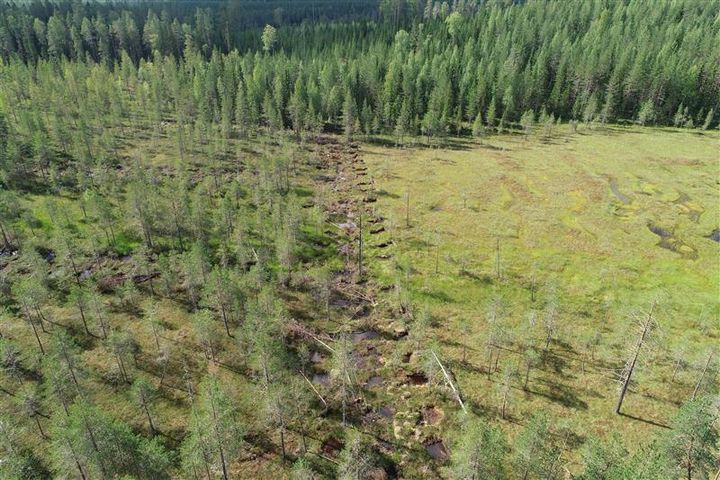
The study, coordinated by the Finnish Environment Institute, the University of Jyväskylä, and Metsähallitus Parks & Wildlife Finland, monitored vegetation changes in restored peatlands that had been previously drained for forestry after two, five, and ten years of restoration. In addition, vegetation in undrained, relatively pristine peatlands and drained but unrestored peatlands were monitored to distinguish the effects of restoration.
“Restoration affected peatland vegetation as intended. Species typical for pristine peatlands, especially Sphagnum mosses, became more abundant, while forest species that had benefited from the drainage decreased. However, full or near-full recovery of peatland vegetation requires much longer than ten years”, says Senior Researcher Merja Elo from the Finnish Environment Institute. “A similar study design has not been implemented anywhere else in the world,” she adds.
Restoration of a forestry-drained peatland is done by filling or blocking drainage ditches to raise the water table level. Restoration plays an important role in Finland, where over half of the country’s peatlands have been drained, mainly for forestry and agriculture. Drainage of 4.7 million hectares has had, and continues to have, detrimental impacts on biodiversity. Additionally, drained peatlands are significant sources of greenhouse gas emissions and waterborne nutrient loading. Successful peatland restoration supports not only biodiversity but also climate goals as well as improves water quality. Understanding the long-term effects of restoration is especially timely given the preparation of national restoration plans .
“As a country rich in peatlands, Finland has a global responsibility to conserve peatland ecosystems. It’s vital to conduct research and produce knowledge that can also benefit other countries,” says Elo.
Results Vary Between Peatland Types
The probability of restoration success was higher in relatively nutrient-rich peatland types, such as oligotrophic and mesotrophic pine mires and open mires. However, in nutrient-poor pine mires and open mires, restoration did not always lead to the desired changes, and in some cases, vegetation in these sites became more similar to vegetation in drained sites.
In drained peatlands where no restoration measures were taken, forest shrubs and mosses continued to increase throughout the monitoring period. Although ditches were re-opened in some sites, this did not explain the systematic changes observed. It is thus unlikely that drained peatlands will recover toward a pristine state on their own in the near future; active restoration is necessary to improve their condition.
“Our findings provide valuable information on factors that can be better considered in targeting and assessing the need for restoration,” says Santtu Kareksela, Service Owner at Metsähallitus Parks & Wildlife Finland.
Collaboration Enables Extensive, Long-Term Monitoring
The research is based on a unique peatland restoration monitoring network coordinated by Metsähallitus Parks & Wildlife Finland, the University of Jyväskylä, and the Finnish Environment Institute. The network includes 151 sites across Finland, monitored for over 10 years.
“Our monitoring network is structured like a scientific experiment: vegetation was monitored both before and after restoration, and the network includes pristine and drained control sites. This comprehensive experimental design allows the network to produce reliable, evidence-based data on the effects of restoration,” explains Professor Janne S. Kotiaho from the University of Jyväskylä.
The peatland monitoring network has been funded and supported over the years by Finland’s Ministry of the Environment and the EU LIFE program (Boreal Peatland LIFE Project and Hydrology LIFE Project). Monitoring continues under the Priodiversity LIFE project.
Keywords
Contacts
Merja EloSenior Researcher+358 (0)29 525 1254
Tel:+358 (0)29 525 1254merja.elo@syke.fiSanttu KarekselaService ownerMetsähallitus Parks & Wildlife Finland
Tel:+358 (0)40 660 2283santtu.kareksela@metsa.fiJanne KotiahoProfessorUniversity of Jyväskylä
Tel:+358 (0)50 594 6881janne.kotiaho@jyu.fi,Media service at Finnish Environment Institute
Our Media Service provides information on research, helps journalists find experts for interviews and provides photos for media use.
Our Communication experts will answer your inquiries on weekdays from 9 am to 4 pm.
Images
Links
Finnish Environment Institute - We build hope through research.
Finnish Environment Institute
Latokartanonkaari 11
00790 Helsinki
+358 295 251 000
It is time to move beyond solving environmental problems one by one, to systemic sustainability transformations. The Finnish Environment Institute (Syke) contributes to building a sustainable society through research, information and services. The Finnish Environment Institute is a research institute with 700 experts and researchers located in Helsinki, Oulu, Jyväskylä and Joensuu.

Subscribe to releases from Suomen ympäristökeskus
Subscribe to all the latest releases from Suomen ympäristökeskus by registering your e-mail address below. You can unsubscribe at any time.
Latest releases from Suomen ympäristökeskus
Östersjöns tillstånd är fortfarande långt från målen – uppföljning som sträcker sig från kustvatten till öppet hav visar varför18.9.2026 08:30:00 EEST | Pressmeddelande
I augusti genomförde Finlands miljöcentral två uppföljningsresor i Östersjön: havsforskningsfartyget Aranda samlade in information från öppet hav och ms Hessu från Skärgårdshavet och kusten. Övergödning är fortfarande Östersjöns största miljöproblem. Enligt den statusbedömning av kustvattnen som publicerades i juni har endast sex procent av Finlands kustvatten god status. Färska mätningar och modelleringar ger en uppdaterad lägesbild av hur näringsbelastningen från land syns i kustvattnen och på öppet hav och varför havets tillstånd fortfarande är långt från målen.
The state of the Baltic Sea still far from the objectives – monitoring extending from coastal waters to the open sea explains why18.9.2026 08:30:00 EEST | Press release
In August, the Finnish Environment Institute carried out two monitoring cruises in the Baltic Sea: Research vessel Aranda collected data from the open sea and M/S Hessu from the Archipelago Sea and the coast. Eutrophication remains the biggest environmental problem in the Baltic Sea. According to the status assessment of coastal waters, published in June, only six per cent of Finnish coastal waters are in a good state. Recent measurements and modelling provide an updated situational picture of how nutrient pollution from land is reflected in coastal waters and the open sea, and why the state of the sea is still far from the objectives.
Itämeren tila on yhä kaukana tavoitteista – rannikkovesistä avomerelle ulottuva seuranta kertoo miksi18.9.2026 08:30:00 EEST | Tiedote
Suomen ympäristökeskus toteutti elokuussa Itämerellä kaksi seurantamatkaa: merentutkimusalus Aranda keräsi tietoa avomereltä ja ms Hessu Saaristomereltä ja rannikolta. Rehevöityminen on edelleen Itämeren suurin ympäristöongelma. Kesäkuussa julkaistun rannikkovesien tila-arvion mukaan vain kuusi prosenttia Suomen rannikkovesistä on hyvässä tilassa. Tuoreet mittaukset ja mallinnukset tarjoavat päivitetyn tilannekuvan siitä, miten maalta tuleva ravinnekuormitus näkyy rannikkovesissä ja avomerellä, ja miksi meren tila on edelleen kaukana tavoitteista.
Nostot medialle 21.–25.9.2026: Miksi Itämeren tila on yhä kaukana tavoitteista? Metsien ennallistamisessa etsitään tasapainoa metsäluonnon tilan parantamisen ja metsätalouden välillä17.9.2026 13:46:33 EEST | Tiedote
Hei! Tässä tiedoksesi meillä Suomen ympäristökeskuksessa ensi viikolla ilmestyviä tiedotteita, uutisia, kampanjoita, blogeja ja uutiskirjeitä. Mukana myös tulevia tapahtumia ja webinaareja. Jakelemme mediakatsauksen torstaisin STT:n kautta. Koosteet löytyvät myös STT-uutishuoneesta, josta voit tilata kaikki Suomen ympäristökeskuksen tiedotteet.
Metsien ennallistamisessa etsitään tasapainoa metsäluonnon tilan parantamisen ja metsätalouden välillä16.9.2026 14:55:34 EEST | Tiedote
Metsäluonnon ekologista tilaa on mahdollista parantaa yhteistyössä metsätalouden kanssa, painottavat Suomen ympäristökeskuksen (Syke) tutkijat. Arvokkaimpia kohteita voidaan suojella, kun taas muualla luonnon tilaa voidaan parantaa metsätalouden rinnalla ennallistamisasetuksen avulla.
In our pressroom you can read all our latest releases, find our press contacts, images, documents and other relevant information about us.
Visit our pressroom