
A humane approach to new technologies – researchers delve into the ethical challenges of AI
14.2.2025 09:38:47 EET | Vaasan yliopisto | Press release
Artificial intelligence (AI) and autonomous systems are rapidly transforming various sectors, bringing new kinds of ethical challenges with them. In a new open-access book, a multidisciplinary group of scholars offers a timely and critical examination of these technologies from a human-centered perspective. The book focuses on how AI and autonomous systems impact human lives and ways of working.
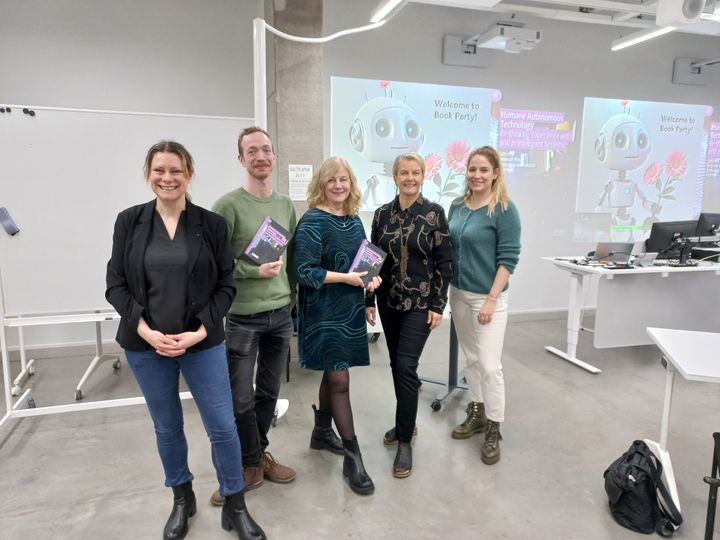
– When developing these systems, and developing business around them, it is vital to understand how humans experience and act in, around and with the technology. Whether you are a software developer or a business developer, this book affords insight that spans across the boundaries of areas in human life, says Rebekah Rousi, Associate Professor in Communication studies at the University of Vaasa, Finland.
Rousi is one of the editors of “Humane autonomous technology” together with Catharina von Koskull, Associate Professor of Marketing from the University of Vaasa and Virpi Roto, Senior Lecturer and Professor of Practice of Design from Aalto University.
AI introduces new ethical challenges
One of the central themes of the book is the ethical implications of AI and autonomous systems. The editors and contributors explore challenging questions related to intellectual property rights, human roles, biases, and the potential for these technologies to adopt deviant human traits. The book emphasises the need for ethical design and implementation practices that prioritise human well-being and creativity.
– The big challenges concerning AI very much relate to ethics, moral conduct, as well as sustainability. In addition to the previously foreseen ‘Robots will steal our jobs’ types of concerns. we have a myriad of new challenges arising. For instance, several big tech companies have pulled out of their promises for carbon neutrality. Also, ethics, ethical content delivery and consumption has proven challenging with the rise of a new form of sweatshops – data cleaning centres – located in the Global South to filter inappropriate content from large language models. There is truly a lot to address both as researchers and developers, Rousi says.
Rousi thinks that more critical thinking, discussion and learning is needed in designing and implementing technology in an ethical way.
– This unfortunately, is something I feel is decreasing in potency as the same technology we should be critiquing is also the technology to which we are turning for up-to-date information.
Impact on various sectors
“Humane autonomous technology” offers a truly multidisciplinary approach to autonomous technology, whereby the contributors represent disciplines including human-computer interaction, interaction design, art, service and consumer studies, as well as cognitive science.
The book is divided into four themes: Labour, co-work and industry; Cognition and emotion; Humanness and values; and Art, design and visual culture. For instance, the book talks about the collaboration between expert employees and chatbots, the design of automation for work enrichment, and how AI can be integrated responsibly to enhance worker-centred practices.
According to Rousi, one of the key learnings from the book is that intention needs to be placed on the role of artificial intelligence in the workplace and services.
– Do we want the technology to remain as a tool, should it be our slave, or even co-worker? For what reasons do we attribute these specific roles to the technology? Once more, reflecting on the information-rich nature of the technology, AI is rapidly changing our relationship to tools, work, and life in general. It also forces us to re-think our own roles and identity, Rousi says.
In the book, Rousi examines ethical development of autonomous maritime technology, addressing two main challenges: how it is designed for the future and what will the future look like, and how the tacit embodied knowledge that domain experts have can be transferred into large autonomous artefact-systems.
– As human beings we are fixated with our ideas. That is, we have fairly firm ideas about what the future will and should look like, and these are usually based of quite old ideas. With this said, the old ideas we possess are dependent on our expert knowledge. I wanted to question whether or not the whole idea of people-less ships and sea-vessels was an ideal scenario, or simply a result of centuries of popular culture.
Further information
Rousi, R., von Koskull, C., & Roto, V. (Eds.). (2024). Humane autonomous technology: Re-thinking experience with and in intelligent systems. Palgrave Macmillan Cham. https://doi.org/10.1007/978-3-031-66528-8
Keywords
Contacts
Rebekah Rousi, Associate Professor (tenure track), University of Vaasa
+358 29 449 8627
rebekah.rousi@uwasa.fi
Links
Alternative languages
Subscribe to releases from Vaasan yliopisto
Subscribe to all the latest releases from Vaasan yliopisto by registering your e-mail address below. You can unsubscribe at any time.
Latest releases from Vaasan yliopisto
Raskaan liikenteen päästöjen leikkaaminen vaatii todellista tietoa kustannuksista, hyödyistä ja käytännön rajoitteista8.10.2026 10:44:35 EEST | Tiedote
Vaasan yliopistossa tarkastettava tuotantotalouden väitöstutkimus tarkastelee liikenteen energianmurrosta ja raskaan maantieliikenteen vähähiilistämistä. Clara Rajalehdon tutkimus osoittaa, että sähkö, biokaasu ja uusiutuva diesel, HVO, voivat kaikki olla kilpailukykyisiä.
Valtakunnallinen hanke kehittää kyberturvallisuuden jatkuvaa oppimista 1,1 miljoonan rahoituksella5.10.2026 08:01:00 EEST | Tiedote
Jyväskylän yliopisto koordinoi 1,1 miljoonan euron hanketta, joka tähtää kyberturvallisuusalan jatkuvan oppimisen koulutuksen kehittämiseen Suomessa. Muut hankkeen toteuttajat ovat Helsingin yliopisto, Lappeenrannan-Lahden teknillinen yliopisto, Oulun yliopisto, Tampereen yliopisto, Turun yliopisto, Vaasan yliopisto ja Åbo Akademi. Hankkeen päätavoitteena on suunnata kyberturvallisuuskoulutusta aiempaa enemmän työelämän tarpeisiin jatkuvan oppimisen periaatteiden mukaisesti.
Vaasan yliopisto on maailman 500 parhaan yliopiston joukossa ja Suomen paras tutkimuksen laadussa1.10.2026 10:42:13 EEST | Tiedote
Vaasan yliopisto on jälleen sijoittunut maailman 500 parhaan yliopiston joukkoon kansainvälisessä Times Higher Education (THE) World University Rankings 2027 -vertailussa. Yliopisto sijoittui luokkaan 451–500, kun vertailussa arvioitiin 2 297 yliopistoa 118 maasta.
Uusi malli tukee tekoälyn käyttöönottoa pienissä ja keskisuurissa yrityksissä28.9.2026 10:05:33 EEST | Tiedote
Osa pienistä ja keskisuurista tilitoimistoista on jäänyt tekoälyn käytössä suurista toimijoista jälkeen. Jarruina voivat toimia niin osaamisen puute kuin investointikustannukset, ja nyt uusi kypsyysmalli auttaakin suunnittelemaan uusia kehitystoimia.
Sote-uudistus teki pirstaleisen järjestelmän yhteistyön tarpeen näkyväksi – systeeminen yhteistyö vaatii vielä rakentamista17.9.2026 11:40:52 EEST | Tiedote
Vaasan yliopistossa tarkastettava väitöstutkimus osallistuu ajankohtaiseen keskusteluun sote-sektorista ja sen kehittämisestä. Marina Kinnusen sosiaali- ja terveyshallintotieteen väitöskirja tarkastelee sote-järjestelmän eri toimijoiden rooleja ja yhteistyötä.
In our pressroom you can read all our latest releases, find our press contacts, images, documents and other relevant information about us.
Visit our pressroom