Utilising fungi to recycle nutrients from food industry wastewater
28.2.2025 08:37:00 EET | Suomen ympäristökeskus | Press release
A recent doctoral dissertation explored a new cost-effective fungal-based treatment solution that converts nutrients from food industry wastewater into valuable biomass. This method simultaneously removes nutrients from wastewater and reduces environmental impacts. The dissertation by Danielle Bansfield, a researcher at the Finnish Environment Institute, will be examined at Aalto University on Friday, 7th March 2025, at 12:00.
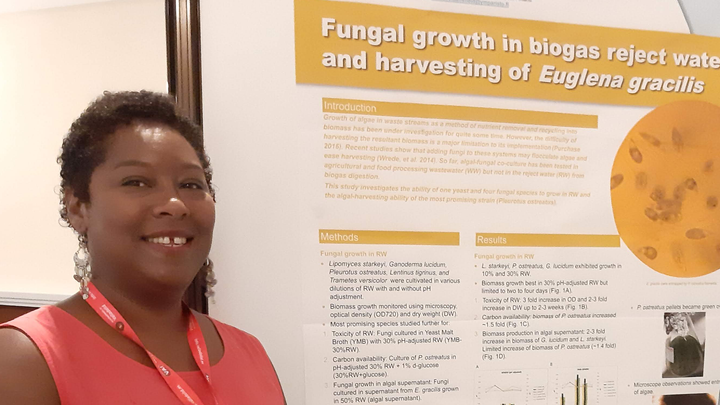
"Fungal-based wastewater treatment is a significant step towards a sustainable and circular bioeconomy, benefiting all stakeholders. The food industry gains cost savings and additional revenue, while water bodies in areas with weaker regulations are protected from untreated discharges. Additionally, the capture and recycling of nutrients from the wastewater into usable biomass promotes circularity", summarises researcher Danielle Bansfield from the Finnish Environment Institute.
There is great demand for circular wastewater treatment methods in the food industry, which produces large amounts of nutrient-rich wastewater, which is either treated at wastewater plants or, in some regions, discharged untreated, causing environmental harm. Traditional treatment removes nutrients but does not recover them. Given rising demand and climate change-driven resource scarcity, reusing both nutrients and water is increasingly important.
Different fungi optimal for biofuel, feed, or dietary supplement production
The dissertation results are promising. The study identified Penicillium corylophilum as the most effective species for nutrient removal and biomass production, and the biomass was found to be a suitable feedstock for biofuel. Geotrichum candidum showed potential for feed or dietary supplements. Among the five food production waste streams investigated, whey proved to be the best growth medium.
Another application for the fungal biomass, fungal-assisted microalgal harvesting, was investigated. Fungal-based microalgal harvesting is more sustainable than traditional microalgal harvesting methods, which are chemical and energy-intensive. During the study, a new, more rapid and resource-efficient fungal-assisted microalgal harvesting method was developed.
Practical applications: a significant opportunity for the food industry and circular economy
Utilising fungi in food industry wastewater treatment presets significant opportunities for further development and industrial applications, offering early adopters a competitive advantage.
Such innovations are essential for the sustainability transition. Implementing nutrient recovery from wastewater and converting it into valuable bioproducts would advance the circular bioeconomy. While challenges remain, this research provides a strong foundation for future progress.
Dissertation defence and thesis
- Time: Friday, 7th March 2025, 12:00–15:00
- Place: Computer Science Building, Aalto University, Otaniemi, Konemiehentie 2, 02150 Espoo. Online (aalto.zoom.us)
- Event Language: English
- Event page: Public defence in Water and Environmental Engineering, M.Sc. Danielle Bansfield (aalto.fi)
- Thesis: Pioneering circular pathways: improved recycling of nutrients in industrial wastewaters into value-added products. Thesis available for public display 10 days prior to the defence.
Further Information
Researcher Danielle Bansfield, Finnish Environment Institute (Syke), tel. +358 295 251 934, firstname.lastname@syke.fi
Keywords
Contacts
Media service at Finnish Environment Institute
Our Media Service provides information on research, helps journalists find experts for interviews and provides photos for media use.
Our Communication experts will answer your inquiries on weekdays from 9 am to 4 pm.
Finnish Environment Institute - We build hope through research.
Finnish Environment Institute
Latokartanonkaari 11
00790 Helsinki
+358 295 251 000
It is time to move beyond solving environmental problems one by one, to systemic sustainability transformations. The Finnish Environment Institute (Syke) contributes to building a sustainable society through research, information and services. The Finnish Environment Institute is a research institute with 700 experts and researchers located in Helsinki, Oulu, Jyväskylä and Joensuu.

Subscribe to releases from Suomen ympäristökeskus
Subscribe to all the latest releases from Suomen ympäristökeskus by registering your e-mail address below. You can unsubscribe at any time.
Latest releases from Suomen ympäristökeskus
Public defence: Just transformative conservation requires challenging existing structures and strengthening local agency25.9.2026 08:56:00 EEST | Press release
In her doctoral dissertation, Liisa Varumo, M.Sc.Admin, a researcher at the Finnish Environment Institute (Syke), examines questions of environmental justice in diverse nature conservation instruments and their potential to contribute to just transformative conservation. The public defence will take place at the University of Eastern Finland on Friday 2 October 2026 at 12.00.
Väitös: Reilu kestävyysmurros luonnonsuojelussa vaatii rakenteiden haastamista ja toimijuuden vahvistamista25.9.2026 08:55:00 EEST | Tiedote
Suomen ympäristökeskuksen tutkija, HTM Liisa Varumo tarkastelee väitöskirjassaan erilaisten luonnonsuojelukeinojen oikeudenmukaisuutta ja niiden mahdollisuuksia edistää reilua kestävyysmurrosta. Väitöstilaisuus pidetään Itä-Suomen yliopistossa perjantaina 2.10.2026 klo 12.00.
Nostot medialle 24.9.–2.10.202624.9.2026 15:57:23 EEST | Tiedote
Hei! Tässä tiedoksesi meillä Suomen ympäristökeskuksessa pian ilmestyviä tiedotteita, uutisia, kampanjoita, blogeja ja uutiskirjeitä. Mukana myös tulevia tapahtumia ja webinaareja. Jakelemme mediakatsauksen torstaisin STT:n kautta. Koosteet löytyvät myös STT-uutishuoneesta, josta voit tilata kaikki Suomen ympäristökeskuksen tiedotteet.
Östersjöns tillstånd är fortfarande långt från målen – uppföljning som sträcker sig från kustvatten till öppet hav visar varför18.9.2026 08:30:00 EEST | Pressmeddelande
I augusti genomförde Finlands miljöcentral två uppföljningsresor i Östersjön: havsforskningsfartyget Aranda samlade in information från öppet hav och ms Hessu från Skärgårdshavet och kusten. Övergödning är fortfarande Östersjöns största miljöproblem. Enligt den statusbedömning av kustvattnen som publicerades i juni har endast sex procent av Finlands kustvatten god status. Färska mätningar och modelleringar ger en uppdaterad lägesbild av hur näringsbelastningen från land syns i kustvattnen och på öppet hav och varför havets tillstånd fortfarande är långt från målen.
The state of the Baltic Sea still far from the objectives – monitoring extending from coastal waters to the open sea explains why18.9.2026 08:30:00 EEST | Press release
In August, the Finnish Environment Institute carried out two monitoring cruises in the Baltic Sea: Research vessel Aranda collected data from the open sea and M/S Hessu from the Archipelago Sea and the coast. Eutrophication remains the biggest environmental problem in the Baltic Sea. According to the status assessment of coastal waters, published in June, only six per cent of Finnish coastal waters are in a good state. Recent measurements and modelling provide an updated situational picture of how nutrient pollution from land is reflected in coastal waters and the open sea, and why the state of the sea is still far from the objectives.
In our pressroom you can read all our latest releases, find our press contacts, images, documents and other relevant information about us.
Visit our pressroom