
Young male Amur tiger has arrived at Korkeasaari Zoo
13.11.2025 11:57:13 EET | Korkeasaaren eläintarha | Press release
This week, a young male Amur tiger from Poland has settled into the Cat Valley. Korkeasaari Zoo is already home to two Amur tigers: a three-year-old female and her twelve-year-old mother. The male has been selected as a future breeding partner for Korkeasaari Zoo’s young female at the conservation program for the endangered Amur tiger.
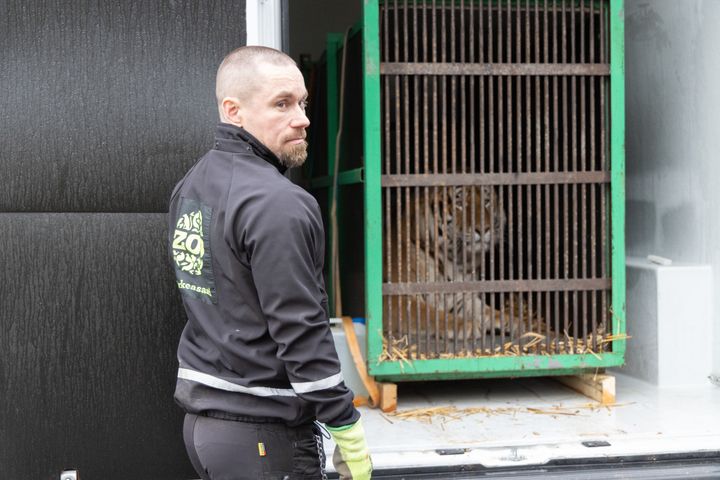
The two-year-old male tiger was born at Zoo Opole in Poland. His two brothers moved to zoos in Germany and the Netherlands earlier this year. After arriving in Finland on Tuesday, the tiger has spent the past couple of days resting and getting settled into his new home. Now he also has access to an outdoor enclosure, which is reserved just for him.
“The male has been described as a calm fellow who gets along well with everyone. The young tigers have been genetically matched as a suitable pair, and even their names fit nicely together: the female born in Korkeasaari Zoo is called Odeya, and the male from Poland is Odris. We hope for cubs in the future, but for now, we’re getting to know the new tiger and make him feel comfortable in his new home,” says zookeeper Jonne Stenroth.
The vitality of the captive Amur tiger population is maintained through the European zoos’ EEP conservation program. The program’s coordinator selects genetically compatible mates for breeding-age tigers, and zoos arrange the necessary animal transfers. There are currently about 550 Amur tigers in zoos and their genetic diversity is greater than in the wild.
In the wild, the Amur tiger lives in eastern Siberia and is the northernmost of all tiger subspecies. According to the latest estimates there are less than 500 individuals in the wild. Poaching and the decline of prey animals are the greatest threats to Amur tigers. Illegal logging fragments their habitats, and roads built for logging provide access to previously remote forest areas. African swine fever has significantly reduced wild boar populations—the Amur tigers’ preferred prey—making food scarcer than before.
Korkeasaari Zoo has supported the conservation of wild Amur tigers for over 25 years. Since conservation work in Russia cannot currently be supported, recent tiger conservation efforts have focused on research within the captive population to promote breeding success and preserve genetic diversity.
Keywords
Contacts
Nina TronttiDirector of Animal Care and ConservationKorkeasaaren eläintarha
Tel:+358 50 511 8118nina.trontti@korkeasaari.fiMari LehmonenCommunications SpecialistKorkeasaaren eläintarha
Media relations, visits and interviews
Images

Links
Korkeasaari Zoo
Korkeasaari Zoo is one of the most popular leisure destinations in Finland, and every year, it attracts almost half a million visitors of all ages. The zoo is open all year round. The most important mission of Korkeasaari is to conserve biodiversity and each and every one of the visitors supports this work. Korkeasaari is home for nearly two thousand animals representing approximately 160 species.
Korkeasaari conserves biodiversity as part of the network of zoos and conservation organizations. Endangered species are conserved by breeding as genetically diverse populations as possible to ensure the future of the species. Declining populations in the nature can be strengthened with the help of zoo populations, and animals can be reintroduced to areas where they have previously lived. European forest reindeers, Przewalski's wild horses and many other species have been sent from Korkeasaari Zoo to the wild.
The Zoo is managed by a non-profit foundation, called the Foundation of Korkeasaari Zoo (officially Korkeasaaren eläintarhan säätiö).

Alternative languages
Subscribe to releases from Korkeasaaren eläintarha
Subscribe to all the latest releases from Korkeasaaren eläintarha by registering your e-mail address below. You can unsubscribe at any time.
Latest releases from Korkeasaaren eläintarha
Esteettömyys ohjasi Korkeasaaren sisäänkäyntirakennuksen suunnittelua17.9.2026 14:53:22 EEST | Tiedote
Korkeasaaren uuden sisäänkäyntirakennuksen ja sen kokoustilan suunnittelussa otettiin alusta alkaen lähtökohdaksi tilojen esteettömyys. Esteettömyyttä tukevat ratkaisut parantavat kaikkien vierailijoiden kokemusta ja tekevät tiloista helppokäyttöiset.
Manulia suojellaan Korkeasaaren Kissojen Yössä10.9.2026 13:00:29 EEST | Tiedote
Korkeasaaren Kissojen Yö ja Syysillat kartuttavat varoja Keski-Aasian aroilla ja vuoristoissa elävän manulin suojeluun. Tapahtuman keräysvaroilla käynnistetyt suojeluprojektit tutkivat paksuturkkisen aasialaisen arokissan levinneisyyttä ja ehkäisevät lajiin luonnossa kohdistuvia uhkia. Korkeasaareen kesällä syntyneet manulinpennut turvaavat lajin säilymistä elinvoimaisena.
Korkeasaareen syntyi kaksi äärimmäisen uhanalaisen amurinleopardin pentua3.9.2026 10:26:47 EEST | Tiedote
Maailman uhanalaisin iso kissaeläin, amurinleopardi, on saanut kauan toivottuja jälkeläisiä Korkeasaaressa. Pennut ovat amurinleopardiparin ensimmäiset ja varttuneet viiden viikon ikään emonsa huolehtivassa hoivassa. Korkeasaaressa on tehty pitkäjänteistä työtä amurinleopardien lisäännyttämiseksi, sillä se tuo tarhakantaan tärkeää geneettistä monimuotoisuutta.
Two critically endangered Amur leopard cubs born at Korkeasaari Zoo3.9.2026 10:26:47 EEST | Press release
The world’s most endangered big cat, the Amur leopard, has welcomed two long-awaited cubs at Korkeasaari Zoo. The cubs are the first offspring of the pair and are now five weeks old, thriving under their mother’s attentive care. Korkeasaari Zoo has been working for many years to breed Amur leopards, as successful breeding plays an important role in maintaining genetic diversity in the zoo population.
Korkeasaaressa on kolme manulinpentua2.7.2026 11:47:40 EEST | Tiedote
Korkeasaaren manulinaaras on hoivannut pesässä kolmea pentua ja nyt se on johdattanut kahden kuukauden ikäiset jälkeläisensä ensimmäistä kertaa ulkoilemaan. Pentue on Korkeasaaren manulipariskunnan kolmas. Eläintarhat edistävät huonosti tunnetun keskiaasialaisen arokissan suojelua monin tavoin.
In our pressroom you can read all our latest releases, find our press contacts, images, documents and other relevant information about us.
Visit our pressroom