Finland must accelerate efforts towards a circular economy of plastics
27.11.2025 07:02:00 EET | Suomen ympäristökeskus | Press release
Progress has been made in advancing the circular economy for plastics, but Finland remains far from its targets and significant additional measures are needed. A new report from the PlastLIFE project, published by the Finnish Environment Institute, highlights how reducing unnecessary plastic consumption, preventing littering, and improving recycling efficiency are key to achieving a circular economy. The issue is pressing, as plastics continue to have considerable climate and environmental impacts. Finland’s goal is to establish a sustainable circular economy for plastics by 2030.
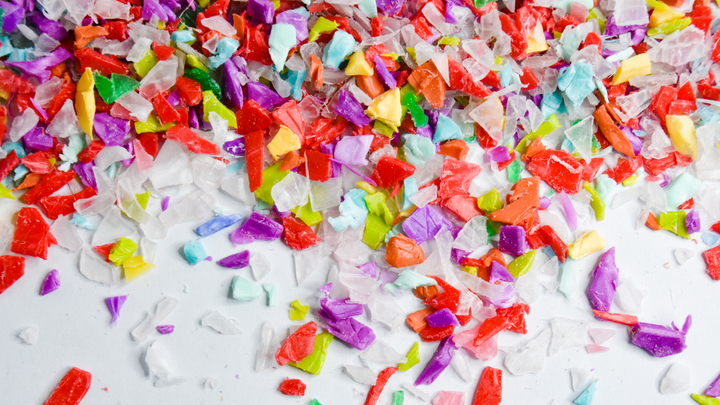
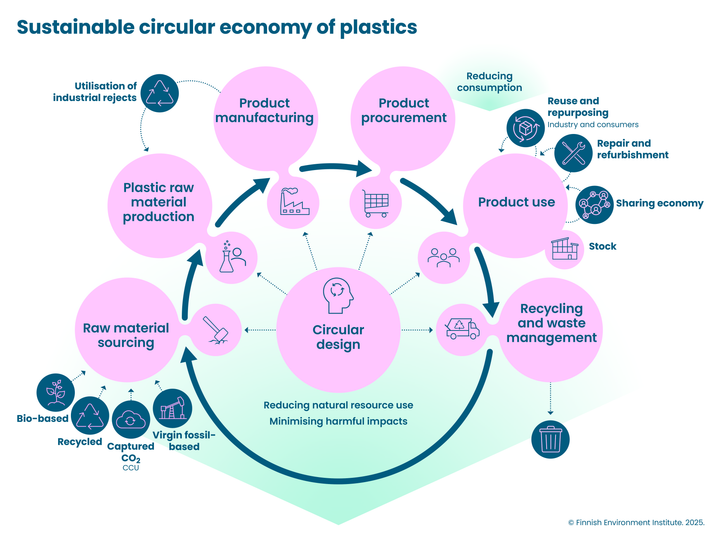
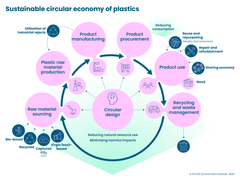
The report identifies two major challenges: reducing unnecessary plastic consumption and increasing reuse. Meeting these challenges requires abandoning outdated practices. Reuse and product repair could be integrated into consumers’ everyday lives by developing new services and durable products. So far, measures to curb consumption have been largely voluntary, and evidence of their effectiveness is limited.
“Achieving a circular economy for plastics will not happen simply by increasing recycling; it demands changes in behaviour, policy, and business,” says Helena Dahlbo, PlastLIFE project manager and senior researcher at the Finnish Environment Institute.
Policy efforts should prioritise plastic safety, reducing climate emissions and littering, and supporting solutions with the best overall sustainability. The report also calls for comprehensive indicators to monitor progress and sufficient research funding to ensure decisions are based on scientific evidence.
To tackle littering, more knowledge is needed about the pathways of plastic waste along with better methods for identifying and monitoring litter. Littering remains a significant problem along coastlines, where about 90 percent of beach litter is plastic.
Climate impacts of production and energy recovery, and other environmental impacts remain significant
Although recycling capacity has improved in recent years, recycling remains limited and focuses mainly on plastic packaging. In 2023, the recycling rate for plastic packaging was just 29 percent, leaving Finland far from the EU’s 50 percent target this year.
“Less than half of all plastic waste consists of separately collected packaging, and around 80 percent of plastic waste is used for energy recovery, which causes significant climate impacts. Recycling of non-packaging plastics should urgently be improved,” says Milja Räisänen, researcher at the Finnish Environment Institute.
Bio-based plastics and recycled plastics have been developed as substitutes for fossil-based raw materials, but the transition is slow, and domestic production faces strong competition in international markets.
PlastLIFE project and the Plastics Roadmap for Finland: Building the foundation for change
The PlastLIFE project (2022–2029) aims to achieve a sustainable circular economy for plastics in Finland by implementing the national Plastics Roadmap through the efforts of 17 organisations. The evaluation of the project’s first phase shows that while cooperation networks and the roadmap’s foundation have strengthened, achieving a circular economy for plastics will require broad and continuous efforts. In its second phase (2026–2029), PlastLIFE will focus on strengthening communication with decision-makers and consumers and expanding collaboration with businesses to scale up results.
The newly published report assesses progress towards the main objectives of the Plastics Roadmap for Finland. The roadmap is a strategic initiative and a broad national program led by ministries aiming for a breakthrough in the circular economy for plastics in Finland by 2030. Co-funded by the EU LIFE program and coordinated by the Finnish Environment Institute, PlastLIFE promotes the roadmap’s goals: reducing littering and avoiding unnecessary plastic consumption, improving recycling, and replacing virgin fossil raw materials in production.
Keywords
Contacts
Helena DahlboSenior Research Scientist
Tel:+358 295 251 095helena.dahlbo@syke.fiMilja RäisänenResearcher
Tel:+358 29 525 1384milja.raisanen@syke.fiJohanna KaunistoCommunication SpecialistFinnish Environment Institute
Tel:+358 29 525 2297johanna.kaunisto@syke.fiMedia service at Finnish Environment Institute
Our Media Service provides information on research, helps journalists find experts for interviews and provides photos for media use.
Our Communication experts will answer your inquiries on weekdays from 9 am to 4 pm.
Images
Links
Finnish Environment Institute - We build hope through research.
Finnish Environment Institute
Latokartanonkaari 11
00790 Helsinki
+358 295 251 000
It is time to move beyond solving environmental problems one by one, to systemic sustainability transformations. The Finnish Environment Institute (Syke) contributes to building a sustainable society through research, information and services. The Finnish Environment Institute is a research institute with 700 experts and researchers located in Helsinki, Oulu, Jyväskylä and Joensuu.

Subscribe to releases from Suomen ympäristökeskus
Subscribe to all the latest releases from Suomen ympäristökeskus by registering your e-mail address below. You can unsubscribe at any time.
Latest releases from Suomen ympäristökeskus
Uusi palvelu arvioi puhtaan energian investointien talous-, työllisyys- ja ympäristövaikutukset3.3.2026 07:00:00 EET | Tiedote
Suomen ympäristökeskus on kehittänyt palvelun, jonka avulla voidaan arvioida erilaisten puhtaan energiasiirtymän investointien talous- ja työllisyysvaikutuksia sekä kansallisesti että alueellisesti. Palvelun avulla voidaan myös tarkastella investointien maailmanlaajuisten tuotantoketjujen ympäristövaikutuksia eli vaikutuksia luonnonvarojen käyttöön, kasvihuonekaasupäästöihin ja ilmansaasteisiin.
Ilmastolain tavoitteita ei ole syytä lieventää – metsistä löytyy edullisia keinoja tavoitteisiin pääsemiseksi2.3.2026 09:19:00 EET | Tiedote
Suomen ilmastolain tavoitteet ovat ajantasaisia ja perusteltuja, selviää Suomen ympäristökeskuksen (Syke) uudesta raportista. Erityisesti maankäyttösektorilta löytyy toimia, joiden avulla on mahdollista vahvistaa nieluja ja vähentää päästöjä tehokkaasti ja edullisesti. Kustannusvaikuttavimmat toimet ovat metsien kiertoaikojen pidentäminen ja harvennusten lieventäminen.
Viikkokatsaus 2.–6.3.202626.2.2026 12:26:13 EET | Tiedote
Hei! Tässä tiedoksesi meillä Suomen ympäristökeskuksessa ensi viikolla ilmestyviä tiedotteita, uutisia, kampanjoita, blogeja ja uutiskirjeitä. Mukana myös tulevia tapahtumia ja webinaareja. Jakelemme viikkokatsauksen torstaisin STT:n kautta. Koosteet löytyvät myös STT-uutishuoneesta, josta voit tilata kaikki Suomen ympäristökeskuksen tiedotteet.
The number of transboundary environmental impact assessment procedures is increasing25.2.2026 12:52:40 EET | Press release
The Espoo Convention on environmental impact assessment in a transboundary context turns 35. With the green transition and the energy transition, the number of these assessment procedures has increased dramatically in recent years.
Antalet gränsöverskridande förfaranden för miljökonsekvensbedömning ökar25.2.2026 12:49:00 EET | Pressmeddelande
Esbokonventionen om gränsöverskridande förfaranden för bedömning av miljökonsekvenser fyller 35 år. I och med den gröna omställningen och energiomställningen har antalet bedömningsförfaranden ökat kraftigt under de senaste åren.
In our pressroom you can read all our latest releases, find our press contacts, images, documents and other relevant information about us.
Visit our pressroom