
A new era of extreme weather events in the Arctic
7.1.2026 21:00:00 EET | Ilmatieteen laitos | Press release
Extreme weather events can greatly affect Arctic nature, but long-term changes in these events have not previously been well understood. A new study shows that extreme weather events have become significantly more common in the Arctic over recent decades.
The Arctic has been observed to warm about three to four times faster than the global average. This rapid warming is also expected to change the frequency and severity of extreme weather events in the region. A new study published in the prestigious scientific journal Science Advances is the first to comprehensively examine long-term changes in several so-called bioclimatic variables. Bioclimate refers to climate conditions relevant to living organisms. The researchers investigated changes spanning more than seven decades, focusing especially on short-lived extreme weather events.
“Seasonality, such as the growing season and snow conditions, is known to be crucial for ecosystem functioning and the success of northern species. However, changes in bioclimatic extreme events have not been previously studied in a comprehensive way,” says research professor Juha Aalto from the Finnish Meteorological Institute.
In addition to rising average temperatures, Arctic terrestrial ecosystems are increasingly experiencing a range of extreme weather events, such as prolonged heatwaves, frost during the growing season, and warm winter spells. The extent and intensity of these changes vary across different parts of the Arctic.
Arctic regions face unprecedented climate conditions
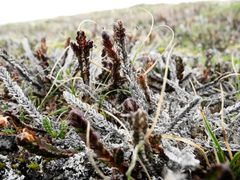
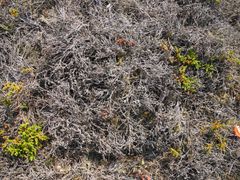
The study shows that in many areas, some of the examined extreme weather events have only begun to appear in the past few decades. One example is rain-on-snow events. The researchers identified new regions affected by rain-on-snow events covering more than 10% of the Arctic land area. Rain falling onto snow creates particular challenges for mammals, as it promotes the formation of ice layers within the snowpack. For example, reindeer are then unable to access the lichens they rely on in their winter grazing grounds.
When looking at multiple types of extreme events together, the researchers found that at least one new extreme event has begun to occur across ca. one-third of the Arctic land area.
“This finding suggests that as the climate changes, Arctic ecosystems will be increasingly exposed to climate conditions they have never experienced before,” says Professor Miska Luoto from the University of Helsinki. “This may have significant long-term consequences for Arctic nature.”
The study also identified regions, so called hotspots, where changes in both seasonal conditions and extreme events have been especially strong. Such areas are found particularly in western Scandinavia, the Canadian Arctic Archipelago, and central Siberia.
An improved picture of northern bioclimate change
The research used modern atmospheric reanalysis data, from which the bioclimatic variables were calculated. Reanalysis combines observations with a weather model, providing the best possible information on atmospheric and surface conditions. This is particularly valuable in remote regions where direct measurements are sparse, such as large parts of the Arctic.
Accurate, up-to-date information on bioclimate is needed for monitoring and predicting Arctic biodiversity, as well as to support climate change adaptation in societies.
The international study, led by the Finnish Meteorological Institute, involved researchers from the Universities of Helsinki and Jyväskylä, as well as from the United Kingdom and France.
Reference:
Aalto, J., Kämäräinen, M., Rantanen, M., Niittynen, P., Phoenix, G., Lenoir, L., Maclean, I., Luoto, M. (2025). A new era of bioclimatic extremes in the terrestrial Arctic. Science Advances. In press.
Pictures:
The attached images may be used in connection with news coverage. The photographer credit must be included.
Keywords
Contacts
Research Professor Juha Aalto, Finnish Meteorological Institute, tel. +358 50 409 0963, juha.aalto@fmi.fi
Professor Miska Luoto, University of Helsinki, tel. +358 50 448 0241, miska.luoto@helsinki.fi
Images
Links
The Finnish Meteorological Institute makes observations and research on the atmosphere, the near space and the seas. It also provides services on weather, sea, air quality, climate and near space for the needs of public safety, business life and citizens. Visit us at ilmatieteenlaitos.fi.
Alternative languages
Subscribe to releases from Ilmatieteen laitos
Subscribe to all the latest releases from Ilmatieteen laitos by registering your e-mail address below. You can unsubscribe at any time.
Latest releases from Ilmatieteen laitos
Viikonloppu alkaa sateisena ja tuulisena – lauantaina ensilumi mahdollista Koillismaalla8.10.2026 13:45:47 EEST | Tiedote
Perjantaina lännestä saapuva matalapaine tuo runsaita sateita maan etelä- ja keskiosiin. Perjantaille on annettu myös tuulivaroituksia merialueille.
// KORJATTU TIEDOTE // otsikkoa muutettu // Arktisen merijään minimilaajuus oli tavanomainen, mutta peittävyys tavallista pienempi7.10.2026 14:01:43 EEST | Tiedote
Tänä vuonna Arktisen merijään pienin laajuus on ollut normaali, mutta maaliskuussa mitattu maksimilaajuus oli ennätyksellisen pieni. Lisäksi Euroopan puoleisella alueella jään peittävyys Pohjoisnavalle asti on ollut poikkeuksellisen pientä ja avoveden osuus tavallista suurempaa.
Länsituuli on tiistaina jopa vaarallisen voimakasta5.10.2026 10:45:31 EEST | Tiedote
Puuskainen tuuli tekee tuhoja etenkin maan länsiosassa, mutta muuallakin maassa tilanteeseen on syytä varautua.
Syyskuu oli Suomessa tavanomaista lämpimämpi ja paikoin erittäin sateinen1.10.2026 11:31:15 EEST | Tiedote
Syyskuussa satoi laajalti tavanomaista enemmän: Lieksan Kolilla sadetta saatiin lähes kuukauden jokaisena päivänä.
Ukkoskausi oli vaisu: salamoita havaittiin Suomessa kolmanneksi vähiten 25 vuoteen29.9.2026 10:43:52 EEST | Tiedote
Touko-syyskuun salamamäärä jäi noin kolmannekseen vuosien 2002–2025 keskiarvosta. Salamarunsain päivä oli 16. elokuuta, jolloin Suomessa paikannettiin 5 600 maasalamaa.
In our pressroom you can read all our latest releases, find our press contacts, images, documents and other relevant information about us.
Visit our pressroom