A new non-indigenous species causing concern in Europe has spread to the Finnish coast
7.5.2026 11:32:48 EEST | Suomen ympäristökeskus | Press release
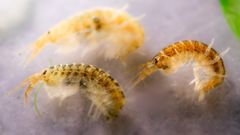
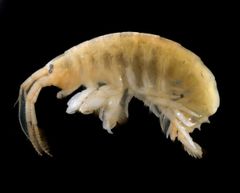
A new amphipod species, known as killer shrimp, has been detected in the non-indigenous species monitoring. The species observed at the Port of Rauma is a threat to invertebrate species, especially in brackish waters, but also in inland waters. In addition, the monitoring revealed a new occurrence of amphipod Melita nitida in Naantali. Non-indigenous species spread not only with ships but also with recreational boats.
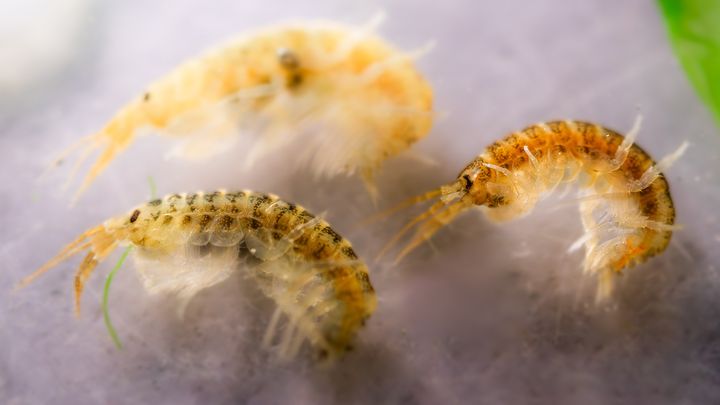
The predatory amphipod, known as killer shrimp (Dikerogammarus villosus), is widespread in Europe, and has now been found in the non-indigenous species monitoring at the Port of Rauma. The species is well studied in Europe and poses a threat to invertebrate species, especially in brackish waters, but also in inland waters. The killer shrimp reduces or displaces native species through effective predation and competition, thus reducing aquatic biodiversity.
The killer shrimp now found in Rauma has spread to coastal waters in Europe from the Black Sea and Caspian Sea region, in the 1990s and, in the 2000s, also to many inland waters. The nearest occurrences are from the coasts of Latvia, Lithuania, Poland and Germany, as well as from lakes in Sweden and Denmark.
The spread of the very drought-resistant killer shrimp can be prevented by treating ships’ ballast waters and washing the hulls, ropes and other water-contact equipment of vessels, including small boats, when moving from one water body to another. Also, water of at least +50 degrees has been found to be sufficient to eliminate killer shrimps.
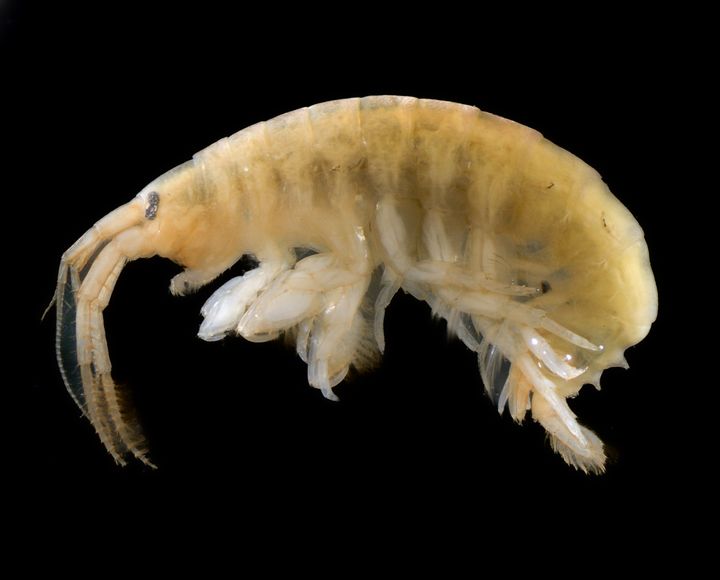
Last year, a new non-indigenous amphipod Melita nitida, was found at the Vuosaari Port. This year it has also been observed at the Port of Naantali. No observations of this amphipod have yet been made elsewhere in the northern Baltic Sea. The closest observations are from the Gdańsk Bay of Poland and the Danish Straits. The amphipod Melita nitida originates from the brackish water bays in North America. It settled on the Atlantic coast side of Europe in the early 2000s. So far, there is no research data on the harmfulness of the species.
Non-indigenous species also spread with recreational boats
The species continue to spread through small boats. For example, the small tanaidacean crustacean (Sinelobus vanhaareni), first observed on the Finnish coast in 2016, has since been found in large numbers in samples taken from the hulls of recreational boats and at marinas. This tanaidacean crustacean can already be found in densities of thousands per square meter.
To prevent the spread of non-indigenous alien species, it is important that all boaters treat and clean their boat hulls.
“There are plenty of high-performance eco-paints in the antifouling paint market that can keep the hull of the boat clean from attaching organisms throughout the boating season. When washing the boat hull, it is important that the detached organisms are collected for disposal so that they do not enter new water areas with the boat. The boat hull can also be washed on land, making it easier to keep organisms away from water bodies,” says Researcher Okko Outinen.
The spread of non-indigenous alien species has accelerated
Over the past 30 years, 20 new non-indigenous species have arrived in Finnish sea areas, i.e. more than half of all non-indigenous species observed in our offshore and coastal areas. Port monitoring of non-indigenous species has been increased in the 2020s, and new species have been discovered through annual monitoring. Most of them are small invertebrates, such as bivalves, polychaetes, amphipods and other crustaceans living among sediments or in coastal vegetation.
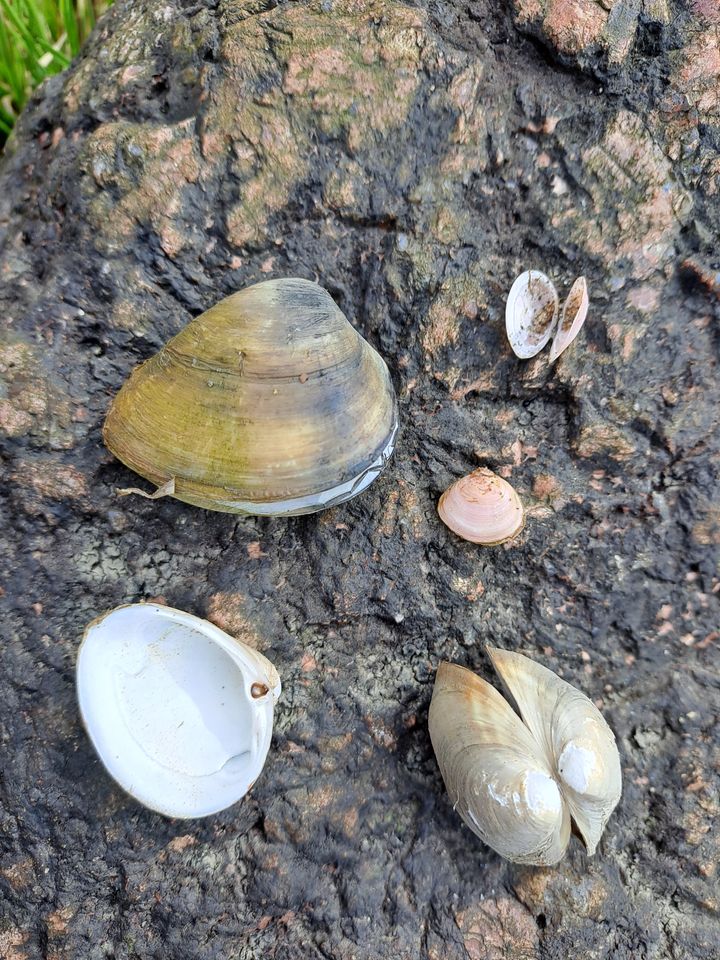
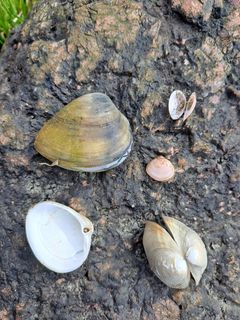
Many alien species have rapidly established themselves in their new habitats. For example, the tiger scud (Gammarus tigrinus) and round goby (Neogobius melanostomus), observed for the first time in the 2000s, are already abundant in the entire coastal area of Finland. Harris mud crab (Rhithropanopeus harrisii) has taken over many types of organism communities in the Archipelago Sea and the Gulf of Finland, and the species is spreading at a steady pace towards the east in the Gulf of Finland and towards the north in the Gulf of Bothnia. This spring, too, thousands of shells of the thick-shell Atlantic rangia (Rangia cuneata), which can reach up to four centimetres in diameter, have drifted on the shores of Porvoo, Loviisa, Pyhtää and Hamina. The comma shrimp (Nippoleucon hinumensis) has rapidly settled as a standard inhabitant of the seabed.
Some non-indigenous species have remained fairly local on the Finnish coast for decades. These include the zebra mussel (Dreissena polymorpha) settled in the Gulf of Finland. The zebra mussel has caused significant economic disadvantages on the Great Lakes of North America. In Finland the largest numbers of zebra mussels are found in the eastern Gulf of Finland. The unfortunate fact is that, as conditions change, an established alien species that seems harmless can begin to spread more efficiently and become harmful.
Citizen observations are important
In addition to non-indigenous species monitoring, new species are also found by citizens. For example, the tube-nosed goby (Proterorhinus spp.) was first observed in connection with a fishing competition in Helsinki, in 2022.
“Today, a significant part of the Harris mud crab observations come from citizens. We encourage all users of coastal areas and waters to observe and report their observations on non-indigenous species and new strange species,” says Research Professor Maiju Lehtiniemi.
Species observations are reported on the Vieraslajit.fi website. The website also contains information and pictures of non-indigenous species.
Keywords
Contacts
Researcher Okko Outinen, Finnish Environment Institute, tel. +358 295 251 915, okko.outinen@syke.fi
Research professor Maiju Lehtiniemi, Finnish Environment Institute, +358 295 251 356, maiju.lehtiniemi@syke.fi
Researcher Katriina Könönen (new species), Finnish Environment Institute, katriina.kononen@gmail.com
Communication Specialist Eija Järvinen, Finnish Environment Institute, Tel. +358 295 251 242, eija.jarvinen@syke.fi
Media service at Finnish Environment Institute
Our Media Service provides information on research, helps journalists find experts for interviews and provides photos for media use.
Our Communication experts will answer your inquiries on weekdays from 9 am to 4 pm.
Images
Links
Finnish Environment Institute - We build hope through research.
Finnish Environment Institute
Latokartanonkaari 11
00790 Helsinki
+358 295 251 000
It is time to move beyond solving environmental problems one by one, to systemic sustainability transformations. The Finnish Environment Institute (Syke) contributes to building a sustainable society through research, information and services. The Finnish Environment Institute is a research institute with 700 experts and researchers located in Helsinki, Oulu, Jyväskylä and Joensuu.

Subscribe to releases from Suomen ympäristökeskus
Subscribe to all the latest releases from Suomen ympäristökeskus by registering your e-mail address below. You can unsubscribe at any time.
Latest releases from Suomen ympäristökeskus
Suomen uhanalaisinta suoluontoa kartoitettiin – lettojen tilanne huolestuttava24.6.2026 09:08:53 EEST | Tiedote
Viisivuotinen maastokartoitus paljasti Suomen lettosoiden tilan huolestuttavan heikoksi. Tilanteen parantaminen vaatii monipuolista keinovalikoimaa ja erityisesti ympäristö- ja luonnonvara-alan toimijoiden sekä maanomistajien tiivistä yhteistyötä.
Kuivuus pitää järvien ja pohjavesien pinnat poikkeuksellisen alhaalla sateista huolimatta16.6.2026 12:01:00 EEST | Tiedote
Alkukesän sateista huolimatta kuivuuden vaikutukset näkyvät edelleen eri puolilla maata. Järvien vedenpinnat ovat yhä selvästi ajankohdan keskiarvojen alapuolella, ja pohjaveden pinnat ovat monin paikoin poikkeuksellisen alhaalla. Vaikka sateet ovat paikoin kohentaneet tilannetta ja pienentäneet akuuttia kuivuutta, vesistöjen ja pohjavesien palautuminen on hidasta. Kuivuustilanteen kehittyminen riippuu loppukesän sademääristä. Kuivuuden vaikutukset voivat jatkua vielä pitkään, vaikka sateita saataisiin lisää. Suomen ympäristökeskus seuraa kuivuustilannetta edelleen aktiivisesti.
Viikkokatsaus 15.–18.6.202611.6.2026 13:29:30 EEST | Tiedote
Hei! Tässä tiedoksesi meillä Suomen ympäristökeskuksessa ensi viikolla ilmestyviä tiedotteita, uutisia, kampanjoita, blogeja ja uutiskirjeitä. Mukana myös tulevia tapahtumia ja webinaareja. Jakelemme viikkokatsauksen torstaisin STT:n kautta. Koosteet löytyvät myös STT-uutishuoneesta, josta voit tilata kaikki Suomen ympäristökeskuksen tiedotteet.
Kuntien päästöt laskevat edelleen – liikenteen osuus päästöistä kasvaa10.6.2026 09:00:00 EEST | Tiedote
Suomen kuntien kasvihuonekaasupäästöt laskivat noin 4 prosenttia vuonna 2024 edelliseen vuoteen verrattuna. Tieliikenteen päästöjen osuus kokonaispäästöistä kasvoi jo noin 30 prosenttiin.
Finlands miljöcentral kartlägger ålgräsängar med drönare i Hangö8.6.2026 09:00:00 EEST | Pressmeddelande
Syke kartlägger ålgräsängar med drönare längs Hangös södra stränder under vecka 24 (8–12.6.2026). Kartläggningen gäller ålgräsängar i grunda havsområden nära stränderna.
In our pressroom you can read all our latest releases, find our press contacts, images, documents and other relevant information about us.
Visit our pressroom