Gypsum could reduce agricultural phosphorus loading around the Baltic Sea region
26.10.2026 09:00:00 EET | Suomen ympäristökeskus | Press release
Gypsum treatment reduced phosphorus losses from agricultural soils in the GYPREG project trials conducted in different countries. The results support wider use of the method across the Baltic Sea region, but broader implementation requires local research, effective logistics, appropriate regulation and long-term funding.
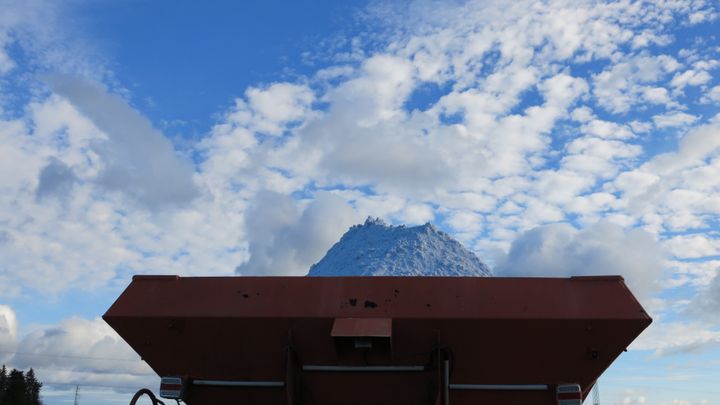
Phosphorus runoff from agriculture contributes to the eutrophication of the Baltic Sea. The GYPREG project (2023–2026), led by the Finnish Environment Institute, investigated whether gypsum treatment of agricultural fields, already in use in mainland Finland, could also be applied in Åland, Sweden, Latvia, Lithuania and Poland.
Field and laboratory trials conducted in the project countries produced encouraging results. In laboratory tests carried out by the Finnish Environment Institute, gypsum reduced phosphorus losses from soil samples from all partner countries.
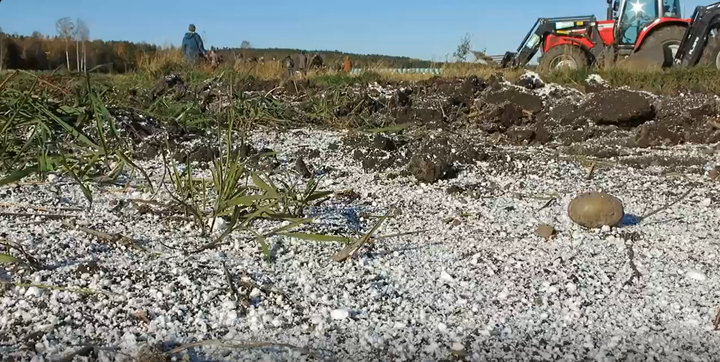
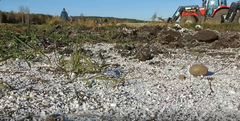
Gypsum, or calcium sulphate, helps retain phosphorus in the soil. At the same time, it improves soil aggregate structure and reduces erosion. In this way, gypsum treatment reduces the transport of both particulate and dissolved phosphorus from fields into waterways.
“Gypsum can buy us time to reduce the concentration of soluble phosphorus in agricultural soils. It is not a solution for eveything, but it is inexpensive and suitable for large agricultural areas,” says GYPREG project leader Petri Ekholm at the Finnish Environment Institute.
Finland’s experience can be applied elsewhere in the Baltic Sea region
In mainland Finland, gypsum treatment is an established method for reducing agricultural nutrient runoff to waterways. Gypsum has been applied to 90,000 hectares of farmland, reducing phosphorus losses on average by half from these fields. In Finland, gypsum is readily available, more than one million tonnes of it are produced annually as a by-product of Yara’s phosphoric acid production in Siilinjärvi.
In the other GYPREG project countries, the method is still relatively unknown.
According to project estimates, Finland, Sweden, Latvia, Lithuania and Poland have a combined total of approximately 5.2 million hectares of clay soils where gypsum treatment could theoretically be applied. In practice, the area suitable for treatment would be smaller.
If gypsum were applied to 30% of the clay soils suitable for the method, phosphorus loading into the Baltic Sea could be reduced by an estimated 350 tonnes per year.
“This would be a tremendous improvement, as a significant share of the reduction from these countries would decrease the nutrient load entering the Baltic Proper,” says Markku Ollikainen, Professor Emeritus of Environmental Economics at the University of Helsinki.
However, the method is not suitable for all fields. Gypsum is not recommended on fields whose runoff drains into lakes.
Farmers need specific local data, advice and financial support
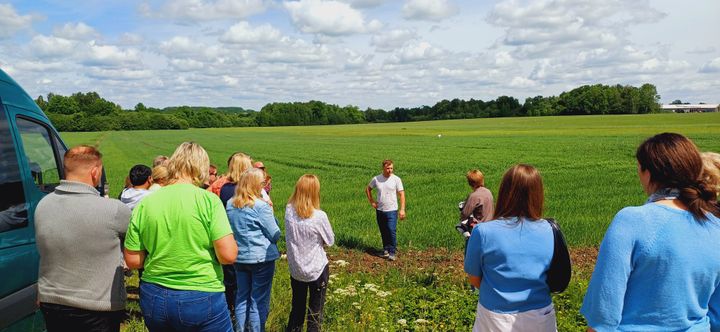
In Åland, gypsum was applied to 272 hectares of farmland during two-year a initiative organised by the John Nurminen Foundation. The treatment reduced phosphorus losses from the fields. However, additional time is needed for the project to gain more information about the long-term effects on crop yields and soil.
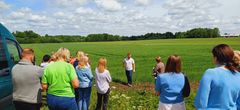
“Getting farmers involved required the help of a local contact person. Active communication and practical advice are also needed,” says Maija Salmiovirta from the John Nurminen Foundation.
Many farmers will consider using gypsum but want local research results and practical examples from other farmers. Adoption is influenced by practical farm arrangements, concerns about soil productivity and the availability of financial support.
Trials conducted in Sweden, Poland and Lithuania also showed that gypsum could reduce agricultural phosphorus loading.
“Swedish farmers are accustomed to using structure lime as a soil amendment, but gypsum treatment is a new method,” says Elsa Bertils from Race For The Baltic. The gypsum trials have received further funding. Gypsum availability is a challenge, but may change, as LKAB mining is expected to start producing it as a mining by-product in northern Sweden.
“We have calculated that there are three million hectares of farmland in Poland that could be suitable for gypsum treatment. The potential is enormous,” says Aleksandra Najda from Race For The Baltic. In Poland the wide variation in farm size makes large-scale implementation more challenging: alongside large farms, there is a vast number of farms of less than ten hectares.
In Lithuania, gypsum could reduce phosphorus losses and help keep the soil’s limited phosphorus reserves available to plants. “Phosphorus losses decreased in our trials, although the reduduction was smaller than in Finland,” says Jolita Petkuvienė from Klaipėda University.
“We also tested a mixture of lime and gypsum. It was less effective reducing phosphorus losses than gypsum alone, but increased soil pH and could therefore be suitable for acidic soils,” says Ieva Mockevičienė from the Lithuanian Research Centre for Agriculture and Forestry.
Wider implementation requires long-term funding and effective logistics
The price, availability and transport logistics of gypsum are key factors in determining where the gypsum method can be used cost-effectively.
“The cost per kilogram of phosphorus removed through gypsum treatment is roughly half that of expanding existing buffer zones, because buffer zones also reduce the area available for cultivation,” Ollikainen says.
The primary benefit of gypsum treatment is the improvement of water quality, while the direct benefits to farmers are limited. According to Ollikainen, public support should therefore also cover the costs incurred by farmers in adopting the method, including the working time required to implement gypsum treatment.
According to the project’s estimate, applying gypsum to 30% of the farmland suitable for the method in the project countries would cost approximately EUR 195 million per year over a five-year period. The estimate includes compensation for the average amount of working time required from farmers.
The country-specific policy recommendations developed in the project highlight the need for clear practices and regulation concerning gypsum quality, long-term funding, and effective procurement and spreading logistics. In Sweden, Latvia, Lithuania and Poland, a key barrier to wider implementation is that gypsum treatment is not yet recognised in environmental and agricultural policy as a soil improvement or water protection measure.
Finland’s experience demonstrates that gypsum treatment can reduce agricultural phosphorus loading. The results of the GYPREG project provide a basis for wider use of the method across the Baltic Sea region. Action by several coastal countries could reduce phosphorus loading more broadly than measures taken by a single country and contribute to achieving good ecological status in the Baltic Sea.
The project’s final seminar will be held in Helsinki and online on 28 October. The GYPREG project has received funding from the EU’s Interreg regional development fund.
Keywords
Contacts
Petri Ekholm, Principal rese
archer, Finnish Environment Institute, p. +358 295 251 102, forename.surname@syke.fi
Markku Ollikainen, Professor Emeritus, University of Helsinki, p.+358 294 158 065, forename.surname@helsinki.fi
Eija Rantajärvi, Communication specialist, Finnish Environment Institute, p. +358 295 251 542, forename.surname@syke.fi
Media service at Finnish Environment Institute
Our Media Service provides information on research, helps journalists find experts for interviews and provides photos for media use.
Our Communication experts will answer your inquiries on weekdays from 9 am to 4 pm.
Images
Links
Finnish Environment Institute - We build hope through research.
Finnish Environment Institute
Latokartanonkaari 11
00790 Helsinki
+358 295 251 000
It is time to move beyond solving environmental problems one by one, to systemic sustainability transformations. The Finnish Environment Institute (Syke) contributes to building a sustainable society through research, information and services. The Finnish Environment Institute is a research institute with 650 experts and researchers located in Helsinki, Oulu, Jyväskylä and Joensuu.
Subscribe to releases from Suomen ympäristökeskus
Subscribe to all the latest releases from Suomen ympäristökeskus by registering your e-mail address below. You can unsubscribe at any time.
Latest releases from Suomen ympäristökeskus
Gips kunde minska jordbrukets fosforbelastning i stora delar av Östersjöområdet26.10.2026 09:00:00 EET | Pressmeddelande
Gipsbehandling minskade fosforläckaget från åkermark i GYPREG-projektets försök i olika länder. Resultaten stöder en bredare användning av metoden i Östersjöområdet, men ett bredare införande förutsätter lokal forskningskunskap, fungerande logistik, tydlig reglering och långsiktig finansiering.
Kipsi voisi vähentää maatalouden fosforikuormitusta laajasti Itämeren alueella26.10.2026 09:00:00 EET | Tiedote
Kipsikäsittely vähensi fosforin huuhtoutumista eri maiden peltomaista GYPREG-projektin kokeissa. Tulokset tukevat menetelmän laajempaa hyödyntämistä Itämeren alueella, mutta käyttöönotto edellyttää paikallista tutkimustietoa, toimivaa logistiikkaa, sääntelyä ja pysyvää rahoitusta.
Tutkimus: Energiakriisi lisäsi puunpolttoa ja arjen energiasäästöä omakotitaloissa26.10.2026 06:00:00 EET | Tiedote
Lähes kaikki sähkölämmitteisten omakotitalojen asukkaat pyrkivät hillitsemään energiakustannuksia talven 2022–2023 energiakriisin aikana. Valtaosa turvautui nopeasti toteutettaviin säästötoimiin, mutta vain harvat investoivat pysyviin energiaratkaisuihin.
Uusi InfraKierto-projekti kehittää infrarakentamisen materiaalivirtojen seurantaa23.10.2026 08:55:00 EEST | Tiedote
Suomessa käytetään valtavia määriä maa- ja kiviaineksia infrarakentamiseen, mutta materiaalien käytöstä tai kiertotaloudesta ei ole tällä hetkellä kattavaa ja ajantasaista kokonaiskuvaa. Tehokkaampi materiaalien käyttö ja sivuvirtojen hyödyntäminen vähentävät luonnonvarojen tarvetta sekä ympäristöön kohdistuvia haitallisia vaikutuksia.
Nostot medialle 26.–30.10.2026 | Energiakriisin opit ja uusiutuvan sähköntuotannon luontovaikutukset22.10.2026 14:28:01 EEST | Tiedote
Hei! Tässä tiedoksesi meillä Suomen ympäristökeskuksessa ensi viikolla ilmestyviä tiedotteita, uutisia, kampanjoita, blogeja ja uutiskirjeitä. Mukana myös tulevia tapahtumia ja webinaareja. Jakelemme mediakatsauksen torstaisin STT:n kautta. Koosteet löytyvät myös STT-uutishuoneesta, josta voit tilata kaikki Suomen ympäristökeskuksen tiedotteet.
In our pressroom you can read all our latest releases, find our press contacts, images, documents and other relevant information about us.
Visit our pressroom