Finland’s Great Cormorant population grew by more than 10 per cent after four years of decline
30.8.2023 10:19:08 EEST | Suomen ympäristökeskus | Press release
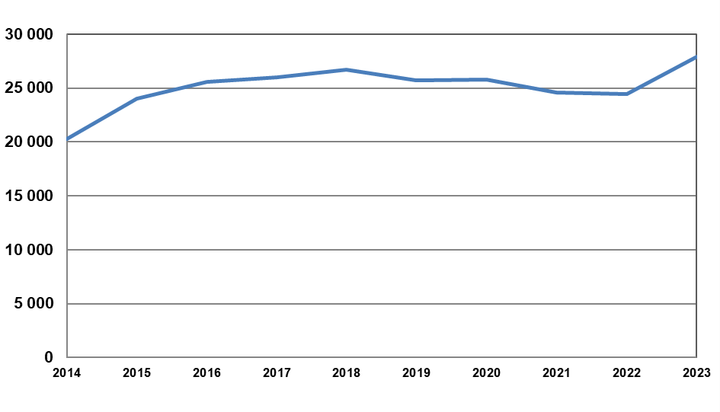
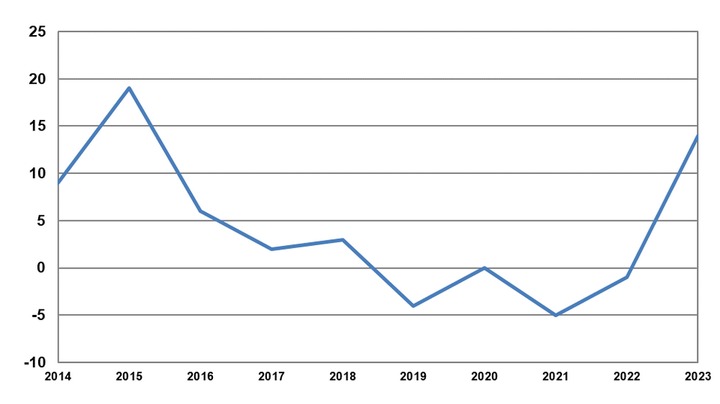
Approximately 27,920 Great Cormorant nests were counted in Finland in summer 2023. Finland’s nesting population increased by 14 per cent (about 3,460 nests) from the previous summer. Since 2015, the number of Great Cormorant nests has varied between approximately 24,000 and 27,000. At regional level, however, the annual variations in the number of nests are large.
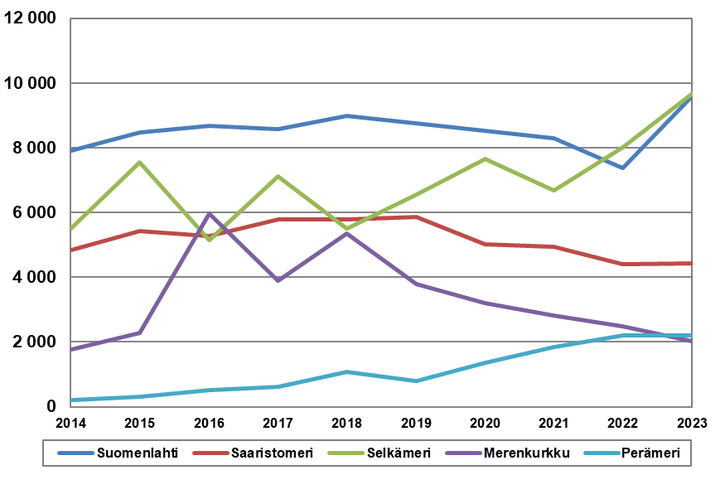
The growth of the Great Cormorant population concentrated in the southern areas of the Bothnian Sea and the western Gulf of Finland, with an increase of approximately 2,500 and nearly 2,300 nests respectively. In Kvarken, on the other hand, the number of nests decreased for the fifth consecutive year and there were approximately 440 nests less than previous summer.
In the entire Gulf of Finland, the Great Cormorant population grew by nearly one third, and in the Bothnian Sea by one fifth. In Kvarken, in turn, the population decreased by almost one fifth. The number of nests in the Archipelago Sea and the Bay of Bothnia remained unchanged.
“The previous winter was milder than average in Europe, which helped Great Cormorants survive the winter. This may have affected the population growth in Finland. It is also possible that Great Cormorants born in other Baltic countries have come here to nest. The nesting population of Great Cormorants was four per cent, approximately 1,200 nests, larger than in the population’s peak year of 2018,” says researcher Pekka Rusanen from the Finnish Environment Institute.
Overall, the Great Cormorant population in the Gulf of Bothnia grew by ten per cent. There were approximately 13,900 nests in the Gulf of Bothnia, of which 9,670 were in the Bothnian Sea, 2,195 in the Bay of Bothnia and 2,030 in Kvarken. In the Gulf of Finland, there were approximately 9,590 nests and in the Archipelago Sea, 4,430 nests. Only one colony of a few pairs was observed inland in Päijät-Häme.
One third of the Great Cormorant nests was located in both the Gulf of Finland and the Bothnian Sea, nearly one fifth of in the Archipelago Sea, and less than ten per cent in both Kvarken and the Bay of Bothnia.
Large colonies dominate
A total of 51 Great Cormorant colonies were observed in Finland. The colonies nested on a total of 68 islets or islands, and seven colonies nested in small groups only in the structures of sea marks, leading marks or lighthouses.
Half of the entire Great Cormorant population nested in the five largest colonies. A quarter of all Great Cormorants nested in a colony in the Port of Rauma alone, where about 6,830 nests were counted. The seven next largest communities with approximately 1,000–2,000 nests each were located in Porvoo (2 pcs), Espoo, Kirkkonummi, Enäjärvi Lake in Pori, Mustasaari and Kokkola.
The Great Cormorant colony in the Port of Rauma is the largest bird colony in history in Finland. In addition, a hundred pairs of Grey Herons, ten pairs of Great Egrets, and for the third year running a pair of White-tailed Eagle, were nesting in the same community. “The natural development of the colony will depend on the amount of fish suitable for chicks, close enough to the nesting site, and on whether the pair of White-tailed Eagles will continue to nest on the site. The pair of nesting eagles protects the colony from predatory non-nesting groups of young White-tailed Eagles. This summer, flocks of 10–20 individuals of White-tailed Eagles were found preying on Great Cormorant chicks in several colonies, even the large ones,” says Rusanen.
At the municipal level, the Great Cormorant population increased most in Rauma, where the colony in the port grew by almost half, with 2,130 nests. In Kirkkonummi, the population grew by approximately 1,000 nests, as the colony returned to its full strength after the decline in previous summer. Significant growth was also observed in Porvoo, Raasepori and Pori, where the numbers increased by approximately 450–650 nests. The population declined most, by 930 nests, in Kristiinankaupunki, and in Mustasaari by 510 nests. The numbers of nests in Hanko, Uusikaupunki and Siikajoki were also clearly decreasing.
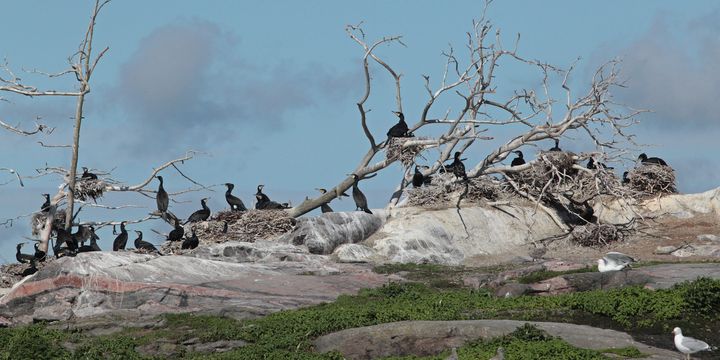
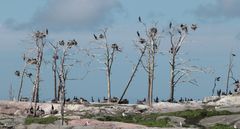
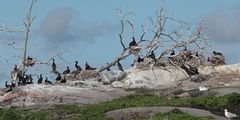
The nesting area of Great Cormorant colonies totalled about 60 hectares. The share of Great Cormorants nesting in trees is still clearly increasing. This summer, nests in trees already accounted for almost 60 per cent of the total number of nests, while four years earlier the share was only one-quarter. The share of colonies nesting in trees and in the inner archipelago has grown due to the increased predation of the White-tailed Eagle, targeting chicks in the nests. In addition, some colonies that have been exposed to the predation by White-tailed Eagles for years have declined and colonies have also changed their nesting sites.
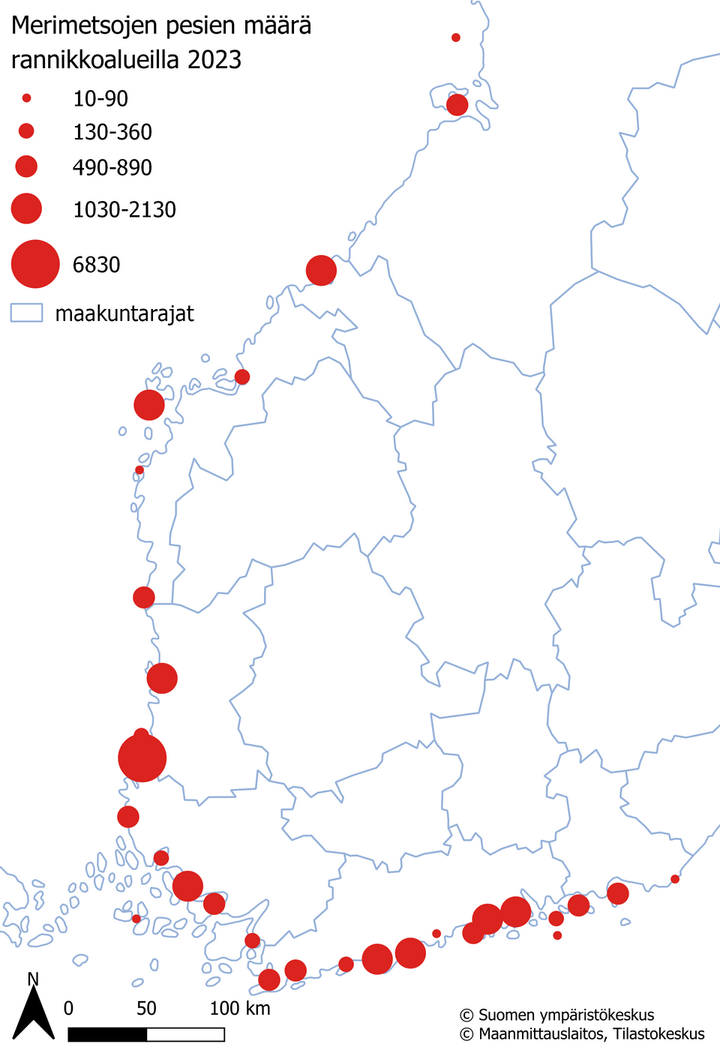
The total number of colonies did not change even though the number of nests increased
This year, over a dozen colonies were deserted since last year. Nearly the same number of new colonies, or colonies that started nesting again after a year’s break, were observed. In total, there were a couple of colonies fewer than in the previous summer. Entirely new colonies of a few dozen nests each were found in Siuntio, Inkoo, Hanko, Kaarina, Masku, Korsnäs and Kokkola.
Illegal harassment of Great Cormorant colonies occurred this summer at least in Loviisa, Porvoo, Sipoo, Hanko and Kristiinankaupunki.
Great Cormorant monitoring
The monitoring of the Great Cormorant population is coordinated by the Finnish Environment Institute. In the summer of 2023, over 80 people participated in the calculations, searches and checks of Great Cormorant colonies. Cormorant monitoring is conducted in order to collect basic information about the ecology and spreading of the species. The Great Cormorant is protected in Finland throughout the year under the Nature Conservation Act, and it is not on the EU’s list of huntable species.
Keywords
Contacts
Media service at Finnish Environment Institute
Our Media Service provides information on research, helps journalists find experts for interviews and provides photos for media use.
Our Communication experts will answer your inquiries on weekdays from 9 am to 4 pm.
Pekka RusanenResearcherFinnish Envronment Institute
Tel:+358 400 148 691firstname.lastname@syke.fiMarkku Mikkola-RoosSenior CoordinatorFinnish Environment Institute
Tel:+358 400 148 685firstname.lastname@syke.fiImages
Documents
Links
It is time to move beyond solving environmental problems one by one, to systemic sustainability transformations. The Finnish Environment Institute (Syke) contributes to building a sustainable society through research, information and services. The Finnish Environment Institute is a research institute with 700 experts and researchers located in Helsinki, Oulu, Jyväskylä and Joensuu.
Subscribe to releases from Suomen ympäristökeskus
Subscribe to all the latest releases from Suomen ympäristökeskus by registering your e-mail address below. You can unsubscribe at any time.
Latest releases from Suomen ympäristökeskus
Nostot medialle 1.10.–9.10.2026: Ympäristö osana kokonaisturvallisuutta, Ennallistamissuunnitelma 50 minuutissa.1.10.2026 14:22:59 EEST | Tiedote
Hei! Tässä tiedoksesi meillä Suomen ympäristökeskuksessa pian ilmestyviä tiedotteita, uutisia, kampanjoita, blogeja ja uutiskirjeitä. Mukana myös tulevia tapahtumia ja webinaareja. Jakelemme mediakatsauksen torstaisin STT:n kautta. Koosteet löytyvät myös STT-uutishuoneesta, josta voit tilata kaikki Suomen ympäristökeskuksen tiedotteet.
Public defence: Just transformative conservation requires challenging existing structures and strengthening local agency25.9.2026 08:56:00 EEST | Press release
In her doctoral dissertation, Liisa Varumo, M.Sc.Admin, a researcher at the Finnish Environment Institute (Syke), examines questions of environmental justice in diverse nature conservation instruments and their potential to contribute to just transformative conservation. The public defence will take place at the University of Eastern Finland on Friday 2 October 2026 at 12.00.
Väitös: Reilu kestävyysmurros luonnonsuojelussa vaatii rakenteiden haastamista ja toimijuuden vahvistamista25.9.2026 08:55:00 EEST | Tiedote
Suomen ympäristökeskuksen tutkija, HTM Liisa Varumo tarkastelee väitöskirjassaan erilaisten luonnonsuojelukeinojen oikeudenmukaisuutta ja niiden mahdollisuuksia edistää reilua kestävyysmurrosta. Väitöstilaisuus pidetään Itä-Suomen yliopistossa perjantaina 2.10.2026 klo 12.00.
Nostot medialle 24.9.–2.10.202624.9.2026 15:57:23 EEST | Tiedote
Hei! Tässä tiedoksesi meillä Suomen ympäristökeskuksessa pian ilmestyviä tiedotteita, uutisia, kampanjoita, blogeja ja uutiskirjeitä. Mukana myös tulevia tapahtumia ja webinaareja. Jakelemme mediakatsauksen torstaisin STT:n kautta. Koosteet löytyvät myös STT-uutishuoneesta, josta voit tilata kaikki Suomen ympäristökeskuksen tiedotteet.
Östersjöns tillstånd är fortfarande långt från målen – uppföljning som sträcker sig från kustvatten till öppet hav visar varför18.9.2026 08:30:00 EEST | Pressmeddelande
I augusti genomförde Finlands miljöcentral två uppföljningsresor i Östersjön: havsforskningsfartyget Aranda samlade in information från öppet hav och ms Hessu från Skärgårdshavet och kusten. Övergödning är fortfarande Östersjöns största miljöproblem. Enligt den statusbedömning av kustvattnen som publicerades i juni har endast sex procent av Finlands kustvatten god status. Färska mätningar och modelleringar ger en uppdaterad lägesbild av hur näringsbelastningen från land syns i kustvattnen och på öppet hav och varför havets tillstånd fortfarande är långt från målen.
In our pressroom you can read all our latest releases, find our press contacts, images, documents and other relevant information about us.
Visit our pressroom