Proposal for saving the Baltic Sea: 34 actions to strengthen the network of marine protected areas
18.11.2025 10:00:00 EET | Suomen ympäristökeskus | Press release
Joint press release from Metsähallitus and Finnish Environment Institute
Baltic Sea nature is threatened by eutrophication, pollution and climate change. The Roadmap for the development of marine protected area network in Finland until 2030, which was drawn up in cooperation between a number of organisations, presents 34 actions for improving the status of the Baltic Sea, safeguarding the most valuable marine areas and achieving international conservation area targets. Never before has an equally extensive and comprehensive plan for the conservation of marine nature been drawn up in Finland.
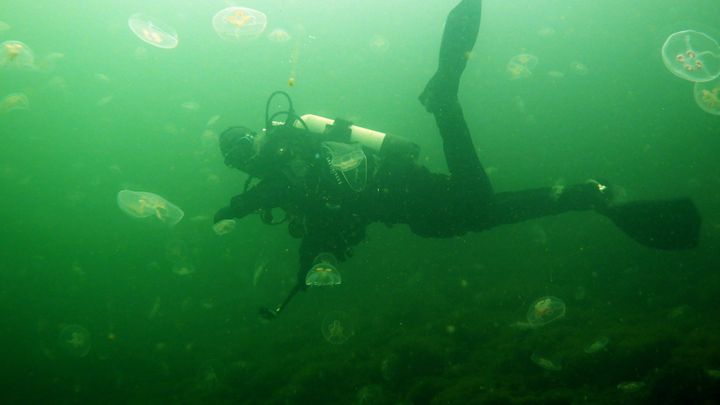
The key action of the Roadmap relate to how existing protected areas can safeguard underwater biodiversity more effectively and how the network of protected areas could be expanded to cover the most valuable marine areas. The plan also contains proposals for establishing the first strict marine nature reserve in Finland as well as for protecting fish breeding areas and paying particular attention to geological diversity.
Protected areas support the conservation of marine nature
The most serious threats to the Baltic Sea are eutrophication, pollution and climate change. They impair the ecological status of the sea and cause large-scale biodiversity loss. While key measures for improving the status of the sea include reducing emissions of nutrients and harmful substances, measures taken in the catchments alone are not enough.
The sea is also affected by additional pressures, which include construction and other types of seabed interventions. In this regard, regional protection is the most effective way of safeguarding biodiversity. The current legislation does not sufficiently protect underwater nature. This is why the Roadmap also proposes legislative amendments and new solutions that to better account for ecological integrity, connectivity and functional diversity.
Key actions presented
- Expanding the current network of protected areas and strengthening the protection of existing areas
- Establishing Finland’s first strict marine nature reserve
- Creating a conservation programme for privately owned marine areas based on voluntary protection
- Addressing issues of fairness in the planning of protection
- Putting in place tailored fishing restrictions to protect breeding areas
- Restoring habitats and safeguarding underwater biodiversity, including geological diversity
The Roadmap is based on an extensive assessment of the current state of marine conservation and over 200,000 observations from the Finnish Inventory Programme for Underwater Marine Diversity (Velmu).
Benefits for humans and nature
“Preventing degradation of nature is always cheaper than restoring the environment afterwards. This is why marine conservation must also be proactive,” says Markku Viitasalo, Research Professor at the Finnish Environment Institute.
Currently, only 11% of Finland's marine areas have been protected. The EU Biodiversity Strategy and the objectives of the Baltic Marine Environment Protection Commission (HELCOM) require a significant increase in marine protected areas.
"To achieve the targets, the share of protected areas needs to be increased to 30% of the sea area. One third of this must be strictly protected,” says Lasse Kurvinen, Senior Conservation Specialist at Metsähallitus Parks & Wildlife Finland.
More protected areas are essentially needed to create an ecologically comprehensive and well-connected conservation network. Marine conservation is an investment in both biodiversity and human well-being.
"Conservation is not just for nature. Improving the status of the marine environment also benefits people, as it builds up fish stocks and improves opportunities for recreation,” points out Penina Blankett, Ministerial Adviser at the Ministry of the Environment, who led the Roadmap preparation.
The Roadmap was produced in cooperation between experts from several organisations as part of the Biodiversea LIFE IP project, which is Finland’s largest cooperation project on safeguarding Baltic Sea biodiversity. The Roadmap was drawn up by the Ministry of the Environment, Finnish Environment Institute, Metsähallitus Parks & Wildlife Finland, Government of Åland, Geological Survey of Finland, Natural Resources Institute Finland, Turku University of Applied Sciences, Åbo Akademi University and Baltic Sea Action Group.
Publication about the roadmap has been published in Finnish and Swedish (Links to the publications below).
Biodiversea LIFE IP – Finland’s largest project focusing on marine nature
Biodiversea LIFE IP (2021–2029) is the largest collaborative project carried out in Finland to safeguard biodiversity in the Baltic Sea. It is co-funded by the European Union's LIFE programme and coordinated by Metsähallitus Parks & Wildlife Finland. Other participants are Ministry of the Environment, Finnish Environment Institute, Natural Resources Institute Finland, Åland Islands Regional Government, Turku University of Applied Sciences, Åbo Akademi University, Geological Survey of Finland and Baltic Sea Action Group. The project has a budget of about EUR 20 million.
Keywords
Contacts
Markku Viitasalo, Research Professor, Finnish Environment Institute, firstname.lastname@syke.fi, tel. +358 295 251 742
Lasse Kurvinen, Senior Conservation Specialist, Metsähallitus Parks & Wildlife Finland, firstname.lastname@metsa.fi; tel. +358 40 6318 029
Penina Blankett, Ministerial Adviser, Ministry of the Environment, firstname.lastname@gov.fi, tel. +358 295 250 058
Maija Häggblom, Nature Conservation Officer, Åland Islands Regional Government, firstname.lastname@regeringen.ax, tel. +358 18 25 458
Eija Järvinen, Communication Specialist, Finnish Environment Institute, firstname.lastname@syke.fi, tel. +358 295 251 242
Media service at Finnish Environment Institute
Our Media Service provides information on research, helps journalists find experts for interviews and provides photos for media use.
Our Communication experts will answer your inquiries on weekdays from 9 am to 4 pm.
Links
Finnish Environment Institute - We build hope through research.
Finnish Environment Institute
Latokartanonkaari 11
00790 Helsinki
+358 295 251 000
It is time to move beyond solving environmental problems one by one, to systemic sustainability transformations. The Finnish Environment Institute (Syke) contributes to building a sustainable society through research, information and services. The Finnish Environment Institute is a research institute with 700 experts and researchers located in Helsinki, Oulu, Jyväskylä and Joensuu.

Subscribe to releases from Suomen ympäristökeskus
Subscribe to all the latest releases from Suomen ympäristökeskus by registering your e-mail address below. You can unsubscribe at any time.
Latest releases from Suomen ympäristökeskus
Viikkokatsaus 30.3–2.4.202626.3.2026 13:34:03 EET | Tiedote
Hei! Tässä tiedoksesi meillä Suomen ympäristökeskuksessa ensi viikolla ilmestyviä tiedotteita, uutisia, kampanjoita, blogeja ja uutiskirjeitä. Mukana myös tulevia tapahtumia ja webinaareja. Jakelemme viikkokatsauksen torstaisin STT:n kautta. Koosteet löytyvät myös STT-uutishuoneesta, josta voit tilata kaikki Suomen ympäristökeskuksen tiedotteet.
Torkan fortsätter vara utmanande – många sjöar och grundvattennivåer är låga26.3.2026 07:00:00 EET | Pressmeddelande
Grundvattennivåerna ligger under det normala i stora delar av landet, med undantag för Lappland. Situationen har förvärrats av en ovanligt snöfattig vinter, långa köldperioder, en tidig vår samt en långvarig torka särskilt i östra Finland. Enligt prognosen kommer de stora sjöarna i östra Finland att förbli låga även i år. Vårens och sommarens torka kan påverka tillgången på vatten, jordbrukets skördar, risken för skogsbränder, vattentransport, rekreationsanvändningen av vattendrag samt energiproduktion. Nederbörden under våren avgör vilka effekter torkan slutligen kommer att ha.
Kuivuustilanne jatkuu haastavana – monet järvet ja pohjavedet matalalla26.3.2026 07:00:00 EET | Tiedote
Pohjavesien pinnat ovat tavanomaista matalammalla useilla alueilla Lappia lukuun ottamatta. Tilannetta ovat pahentaneet poikkeuksellisen vähäluminen talvi, pitkät pakkasjaksot, aikainen kevät sekä erityisesti Itä-Suomessa pitkään jatkunut kuivuustilanne. Ennusteen mukaan Itä-Suomen suuret järvet pysyvät tänäkin vuonna matalalla. Kevään ja kesän kuivuus voi vaikuttaa talousveden riittävyyteen, maatalouden satoihin, maastopaloihin, vesiliikenteeseen, vesistöjen virkistyskäyttöön ja energiantuotantoon. Kevään sademäärät vaikuttavat lopullisen kuivuustilanteen kehittymiseen.
Muovi ei kuulu maaperään vaan kiertoon – puutarhurin muovivalinnat näkyvät maaperässä pitkään24.3.2026 07:30:00 EET | Tiedote
Muovi on vakiinnuttanut paikkansa paitsi kodeissa myös kotipuutarhoissa: ruukuissa, katteissa, sidontanaruissa ja multapusseissa. Oikein käytettynä se kestää ja kiertää. Maaperään päätyessään muovi ei kuitenkaan katoa, vaan pilkkoutuu mikromuoviksi, joka voi säilyä ympäristössä pitkään.
Tutkijat: Suomessa ei tunnisteta energiaköyhyyttä23.3.2026 07:03:50 EET | Tiedote
Suomalaisista kotitalouksista noin 7–15 prosenttia on energiaköyhiä, mikä suurimmillaan tarkoittaa noin 300 000 kotia. Aalto-yliopiston ja Suomen ympäristökeskuksen tuoreen tutkimuksen mukaan energiaköyhyys liittyy muun muassa lämmitysmuotoon, asuinpaikkaan, työmarkkinatilanteeseen, perhekokoon ja sukupuoleen.
In our pressroom you can read all our latest releases, find our press contacts, images, documents and other relevant information about us.
Visit our pressroom