WORM project issues guidelines for sustainable waste management in humanitarian response
18.12.2025 10:51:56 EET | Svenska handelshögskolan | Press release
The EU-funded research project Waste in Humanitarian Operations: Reduction and Minimisation (WORM) has produced a set of standard operational procedures designed to improve waste management in humanitarian field hospitals and emergency medical teams.
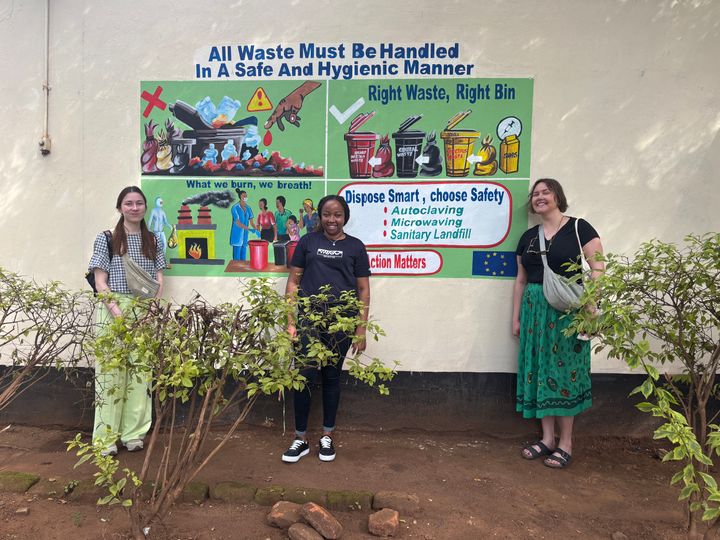
Field hospitals play a critical role in crisis response, but they also generate complex waste streams. Up to 15% of their waste is hazardous, and current practices such as unregulated incineration and inappropriate disposal of fossil fuel-based materials can harm both public health and the environment.
The WORM project has outlined standard operational procedures that aim to bring sustainability and circular economy principles into humanitarian logistics.
“Our goal was to make waste management a core operational function in the humanitarian supply chain, not just an afterthought,” says Virva Tuomala, postdoctoral researcher at Hanken School of Economics. “These procedures give practical tools for reducing waste through reuse, recycling, and responsible disposal while also being transparent and safe.”
Two key frameworks for standard operational procedures
The standard operational procedures cover two critical areas. On the one hand, they focus on guidelines for using products efficiently, making equipment last longer, and setting up systems for recycling and repair during deployment. On the other hand, there is also a need for clear steps to make sure sustainable waste practices continue when field hospitals are handed over to local partners.
“Field hospitals are often donated after deployment, so it’s crucial that the principles of sustainability don’t stop there,” Tuomala explains. “We want the handover process to make sure responsibilities for waste management are clear and that local partners can keep following these standards.”
To make this possible, there is a need for clear documentation, awareness campaigns to engage locals, and checks to ensure donated equipment can be repaired.
Circular humanitarian response can be cost effective
WORM also devised procurement guidelines that recommend sustainable materials like bio-based and recyclable options. They also focus on repair and forming local partnerships that can assist in making equipment last longer. Before machinery or any other assets are sent over, it has to be clear that it also can be repaired locally. The standard operating procedures build on these guidelines.
“It’s important to involve the local community and create opportunities for recycling and repair training. Building skills and enhancing competencies both among local partners and other NGOs is very beneficial,” Tuomala notes.
Higher costs are often given as an argument against circular and low-carbon humanitarian response. However, according to Tuomala it doesn’t have to be more expensive in the long run.
“Initially there might be higher costs, but if sustainability is integrated right from the start of the project, it will eventually benefit both the environment and operational efficiency,” Tuomala summarises.
The WORM project’s standard operational procedures will be available for use in cross-sectoral trainings and applied in field operations, for example by WORM partner International Medical Corps.
More information about the project: WORM – Waste in Humanitarian Operations: Reduction and Minimisation
Virva Tuomala, postdoctoral researcher
Hanken School of Economics
virva.tuomala@hanken.fi
Contacts
Marlene GünsbergSenior Communications Specialist
Tel:040 3521212marlene.gunsberg@hanken.fiAbout
Hanken School of Economics is a leading, internationally accredited university with over a hundred years of experience in education and research in economics and business administration. The research is of a high standard and constitutes the foundation of all teaching. Hanken has close ties to the business community and an active alumni network with over 16 000 alumni in 70 countries worldwide.
Alternative languages
Subscribe to releases from Svenska handelshögskolan
Subscribe to all the latest releases from Svenska handelshögskolan by registering your e-mail address below. You can unsubscribe at any time.
Latest releases from Svenska handelshögskolan
Hanken bäst i Finland och bland de tre främsta i Norden7.9.2026 09:53:19 EEST | Pressmeddelande
Svenska handelshögskolans (Hanken) magisterutbildning stiger till plats 56 i världen i årets upplaga av Financial Times Masters in Management-rankning. Resultatet placerar Hanken i topp i Finland och bland de tre främsta handelshögskolorna i Norden.
Hanken paras Suomessa ja kolmen parhaan joukossa Pohjoismaissa7.9.2026 09:53:19 EEST | Tiedote
Kauppakorkeakoulu Hankenin maisterikoulutus nousee sijalle 56 maailmassa tämän vuoden Financial Times Masters in Management -rankingissa. Tulos nostaa Hankenin Suomen kärkeen ja Pohjoismaiden kolmen parhaan kauppakorkeakoulun joukkoon.
Hanken best in Finland and among the top three in the Nordic region7.9.2026 09:53:19 EEST | Press release
Hanken School of Economics’ master's programme rises to 56th place globally in this year's Financial Times Masters in Management ranking. The result ranks Hanken first in Finland and among the top three business schools in the Nordic region.
Esa Rautalinko ny Executive in Residence vid Svenska handelshögskolan1.9.2026 08:33:01 EEST | Pressmeddelande
Den erfarna företagsledaren Esa Rautalinko har utsetts till Executive in Residence vid Svenska handelshögskolan (Hanken). Han är knuten till ämnet logistik och socialt ansvar.
Esa Rautalinko Kauppakorkeakoulu Hankenin uudeksi Executive in Residence -asiantuntijaksi1.9.2026 08:33:01 EEST | Tiedote
Kokenut yritysjohtaja Esa Rautalinko on nimitetty Kauppakorkeakoulu Hankenin Executive in Residence -asiantuntijaksi. Hän toimii toimitusketjujohtamisen ja yhteiskuntavastuun oppiaineiden yhteydessä.
In our pressroom you can read all our latest releases, find our press contacts, images, documents and other relevant information about us.
Visit our pressroom